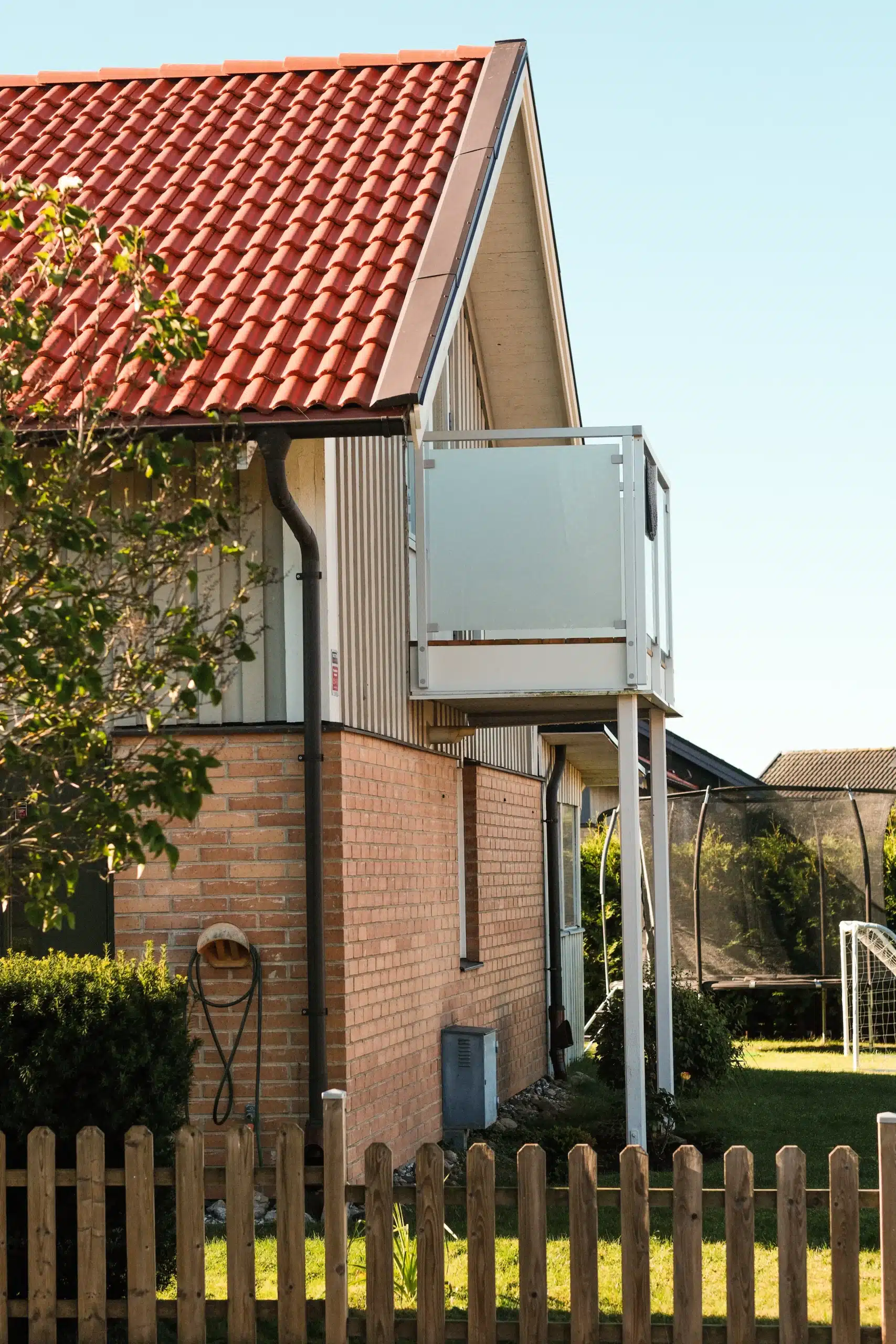
You choose the right awning fabric by weighing the properties of the fabric against how the awning will be used and the look you want. The material affects how the fabric copes with sun and weather, while the colour affects both the look of the awning and the light you get beneath it.
The colour should therefore not be chosen only on how the fabric looks against the façade. Neutral colours affect the tone of the light less, while stronger colours can give more noticeably coloured light under the awning. It is a good idea to judge a fabric sample both against the house and with the sun behind it.
In this guide we go through common awning fabric materials, how the choice of colour affects light and shade, and how to clean and care for the fabric to keep both its function and its looks over time.
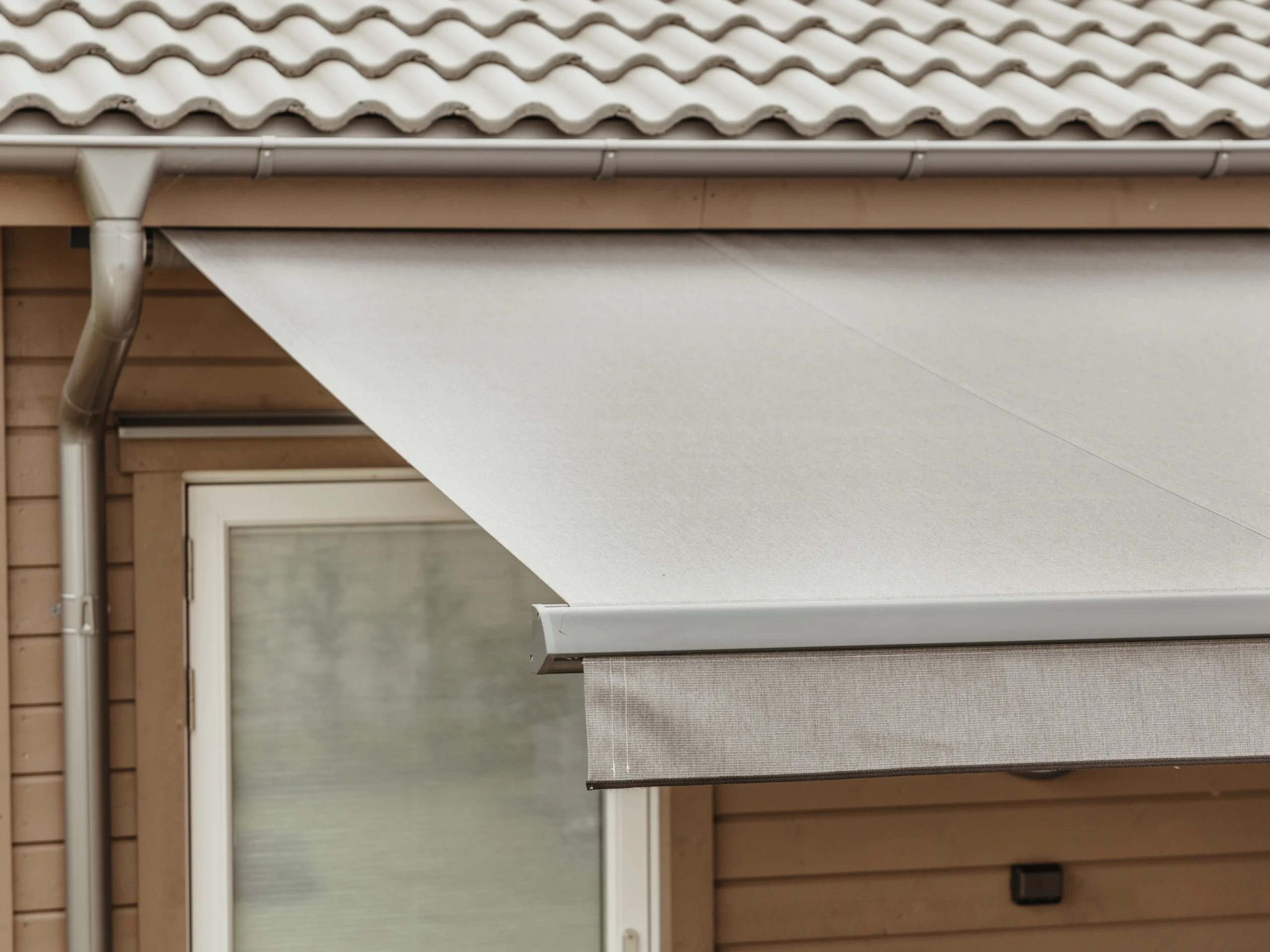
What material should you choose for the awning fabric?
Acrylic is the most common choice for patio awnings since solution-dyed fibres tend to retain their colour well even when the fabric is exposed to a lot of sun. Polyester is often lighter and can be an alternative when weight or price is a major consideration, but its properties vary depending on the fabric and finish.
| Property | Acrylic | Polyester |
|---|---|---|
| Colour Fastness | Solution-dyed fibre gives good colour fastness | May fade more quickly in strong sunlight |
| Water repellency | Achieved through proofing | Can be achieved through proofing or a coated surface |
| Breathability | Usually good | May be affected by any coating |
| Weight | Slightly heavier | Often lighter |
| Sun-exposed locations | Works well where the fabric is exposed to a lot of sun | Colour fastness may vary more between fabrics |
How does the colour of the awning fabric affect light, shade, and appearance?
The colour affects both how the awning appears against the façade and the light it casts beneath it. Light and neutral shades create a different impression than dark or brightly coloured fabrics, which can alter the tone of the light more noticeably.
- Light Colours
- It creates a bright and airy look and can be a good choice when you want the awning to blend in with a light-coloured façade.
- Dark shades
- Creates a more pronounced look and a darker glow under the awning. The contrast is particularly striking against a light-coloured façade.
- Vibrant Colours
- It can clearly alter the light under the awning. A red or green fabric therefore affects how furniture, plants, and other colours are perceived on the patio.
- Shades of grey and sand
- They provide a more neutral light and are easy to pair with many exterior colours and materials.
- Green shades
- It can work well in settings with lots of greenery, but a distinctly green fabric can also give the light beneath the awning a green tint.
- Striped fabric
- It creates a more classic and patterned look than a solid-colour fabric and therefore becomes a more prominent feature of the façade's appearance.
When does awning fabric need reproofing?
The awning fabric needs reproofing when water no longer beads on the surface but starts to soak into the fabric. Go by how the fabric behaves rather than by how old the awning is.
The waterproofing also makes it harder for dirt and moisture to stick. If the fabric gets wet, it should be allowed to dry completely while fully extended before the awning is rolled up again, since prolonged exposure to moisture can increase the risk of discolouration and mould.
The water no longer beads up
When the droplets begin to be absorbed into the fabric instead of remaining on the surface, the water-repellent effect has weakened.
Dirt sticks more easily
Pollen, dust, tree sap, and other dirt adhere more easily when the surface treatment no longer repels dirt as effectively.
The fabric also retains moisture longer
If the fabric gets soaked more easily or dries more slowly, this is a sign that the fabric's water-repellent properties should be checked.
How do you clean awning fabric properly?
Clean the awning fabric gently to remove dirt without unnecessarily damaging the fabric or its water-repellent treatment. Start with loose dirt, use mild cleaning methods and let the fabric dry fully before retracting the awning.
Check this when you clean the awning fabric
-
Brush off loose dirt first
Remove dry debris, pollen, and other loose dirt before you wet the fabric.
-
Wash with water and a soft brush
If necessary, use a mild detergent designed for outdoor textiles. Avoid pressure washers, strong solvents, and abrasive cleaners, as they can damage the fabric and its water-repellent treatment.
-
Allow the fabric to dry fully with the awning extended
Do not retract the awning while the fabric is still damp. Leave the awning extended until the fabric has dried completely.
-
Check the water-repellent treatment after cleaning
If water no longer beads on the surface, the fabric’s water-repellent treatment may need to be renewed.
Summary: Handle with care, avoid harsh cleaning, and never roll up the awning fabric until it is completely dry.
Which awning fabric and shade are the best fit?
Start by considering the façade, the sun exposure, and the kind of light you want under the awning. If you want to compare fabrics and colours, customer service can help you further.
How do you choose and care for the awning fabric?
Choose awning fabric based on how much sun the awning is exposed to, the type of light and look you want, and how the fabric should be maintained over time. The material, colour, cleaning, and waterproofing all work together to determine how the awning fabric performs and ages.
Which is better for awning fabric – acrylic or polyester?
Acrylic is a common choice for sun-exposed patio awnings since solution-dyed fibres typically offer good colour fastness. Polyester is often lighter, but its properties vary depending on the type of weave and finish.
Can the awning fabric withstand rain?
A water-repellent awning fabric can withstand light rain if the awning has sufficient slope so that the water runs off. The awning fabric, however, is primarily intended for sun protection and should not be used as a rain shelter.
Can you roll up a wet awning fabric?
Awning fabric should not be left damp and rolled up any longer than necessary, as moisture increases the risk of discolouration and mould. If the fabric is rolled up while wet, the awning should be unrolled again and allowed to dry completely as soon as the weather permits.
How do you wash awning fabric without damaging the water-repellent treatment?
First, brush off any loose dirt, and then clean the awning fabric with water, a soft brush, and, if necessary, a mild detergent. Avoid pressure washers, strong solvents, and abrasive cleaners, which can damage the fabric and its water-repellent treatment.
When does awning fabric need reproofing?
The awning fabric may need reproofing when water no longer beads on the surface but starts to soak into the fabric. So go by the fabric’s water-repellent properties rather than a fixed time interval.
How do you choose the colour of an awning fabric?
Choose the colour of the awning fabric based on both the façade and the amount of light you want under the awning. Neutral colours have less of an effect on the colour of the light, while bolder colours can produce a more distinctly coloured light.