Learn how to plan protection around a pool and compare balustrades, fencing and other measures. The guide covers child safety, location, materials, structural fixings and pool exposure.
See how others have designed their staircase balustrades, glass balustrades for patios and frameless balustrades for balconies. Find inspiration among modern, classic and discreet solutions – each with a personal touch.
Our online design tool helps you plan the appearance and cost.
Our balustrades are designed for self-installation and are supplied with installation instructions. Our team can offer advice to help you plan your project.
A balustrade around a pool provides a clear boundary, a good view, and can withstand the humid environment. Glass balustrades are a common choice because they maintain a clear view of the pool area while also blocking the wind, allowing the space to be used for longer periods. This makes the pool area both more pleasant and safer.
Posts, fittings and fixings must withstand moisture and chlorine, and marine-grade stainless steel or powder-coated aluminium are durable choices. Design the balustrade so that it is hard for children to climb, and plan openings and gates carefully. A balustrade never replaces supervising children. Check the requirements that apply to pools where you live.
For outdoor stainless steel balustrades, marine-grade stainless steel, AISI 316L, is often a better choice, particularly near the coast and in other exposed environments. Its molybdenum content improves resistance to salt and chlorides. AISI 304 can be suitable indoors and in sheltered outdoor settings.
Stainless steel is not completely maintenance-free. Even a balustrade made from 316L can develop deposits or surface staining if salt, dirt and metal particles are left on it for long periods, so clean it as needed. Surface finish also matters: a smooth, well-finished surface is easier to keep clean. Choose the steel grade for the location and environment, not just its appearance.
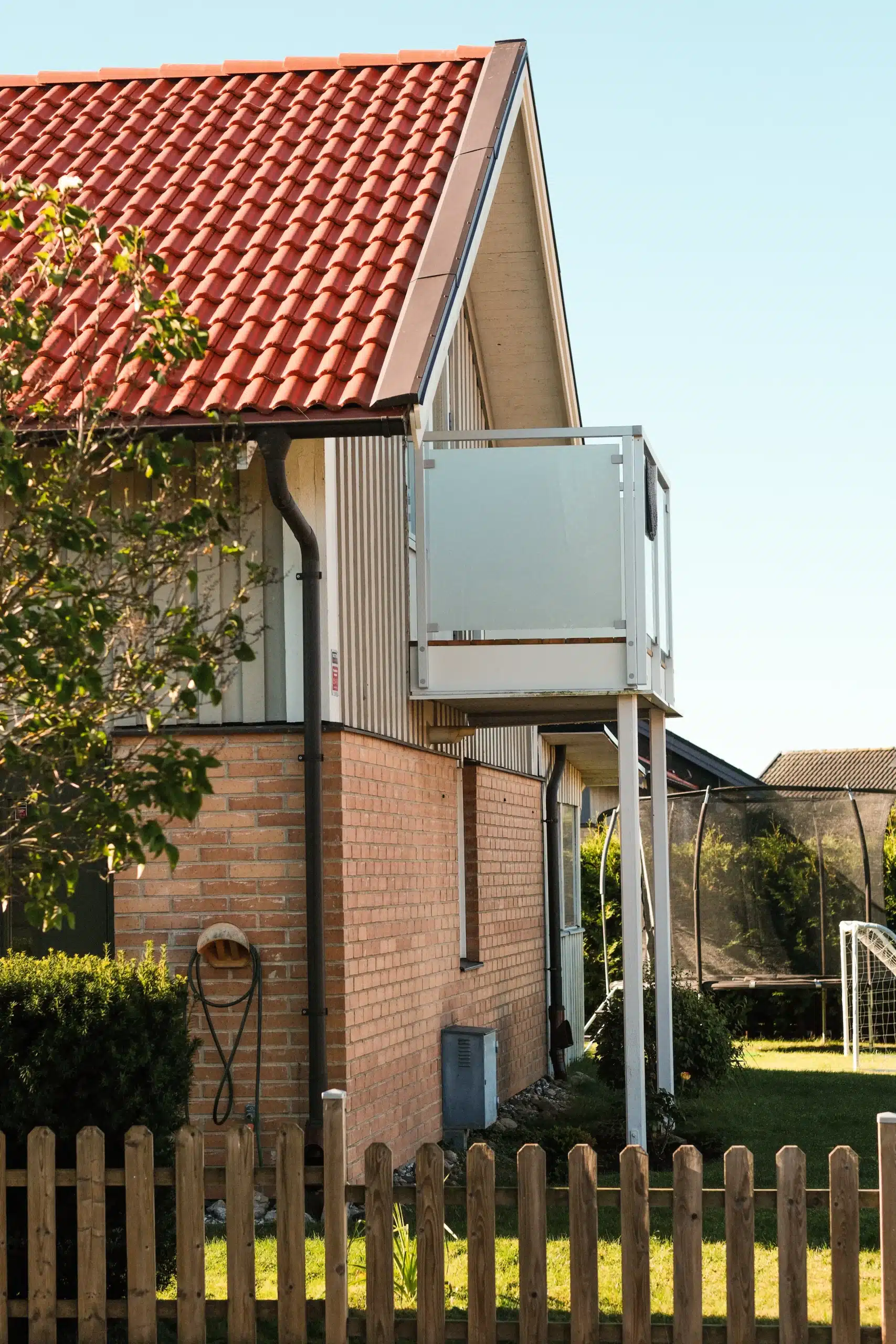
Opal glass, also known as frosted glass, is usually the best choice when you want to reduce visibility from the outside while maintaining natural light. It lets light through but makes it difficult to see details through the glass, and is suitable for balconies, patios, and densely populated areas. Tinted glass softens the light and slightly reduces visibility from the outside, but you can still see through it.
Clear glass provides the most light and the best view but offers almost no privacy. You can combine opal glass facing the neighbour or the street with clear glass where the view is most important. Keep in mind that tinted glass does not provide one-way privacy – in the evening, when it’s bright inside, it becomes easier to see through.
A balustrade designed with children in mind should help reduce the risk of climbing, falling through openings or becoming trapped. The overall construction matters, not just the material used. Requirements for openings and features intended to discourage climbing depend on the applicable local regulations. Glass and vertical infill can be suitable options.
Avoid horizontal elements that could be used as footholds, and ensure gaps between bars, below the balustrade and near stair treads are designed to prevent children passing through or becoming trapped. Furniture and planters placed beside a balustrade may also make climbing easier. Glass balustrades and vertical infill can be suitable options, but no design is automatically child-safe.
The easiest way to clean a glass balustrade is with lukewarm water, a mild detergent, and a soft microfiber cloth or window squeegee. Avoid strong or abrasive cleaners, which can damage the surface of the glass or the balustrade’s hardware. How often this is necessary depends on the location. Near the sea, roads, or areas with high pollen counts, the balustrade may need to be washed more often.
A nano-coating makes the glass more water-repellent, so dirt and limescale don’t stick as easily, but it doesn’t replace cleaning. Also wipe down the clamps and hardware – stainless steel ones with water and a mild detergent, painted ones with a soft cloth – and check at the same time that they’re securely fastened.
A pool area is often a place to gather in summer. Where young children may be present, barriers should be designed to discourage climbing or squeezing through, and gates should close and lock as required. A balustrade or fence never replaces adult supervision around water.
Near water, materials may be exposed to moisture, pool chemicals and, in some locations, salt.
For a ground-level pool, a purpose-designed fence and gate may be more appropriate – see fences and gates.
Glass can help shelter a pool area from wind while allowing daylight through. Frosted or tinted glass may also reduce overlooking. Depending on the product, we use toughened and laminated safety glass; suitable specifications must be selected for the installation.
Each system is made to the specified measurements, and the fixings must suit the substrate – whether timber decking, stone paving or concrete – and the actual supporting structure. Clean glass and aluminium as recommended and maintain stainless steel components according to exposure.
Your basket will be emptied if you switch to another country.