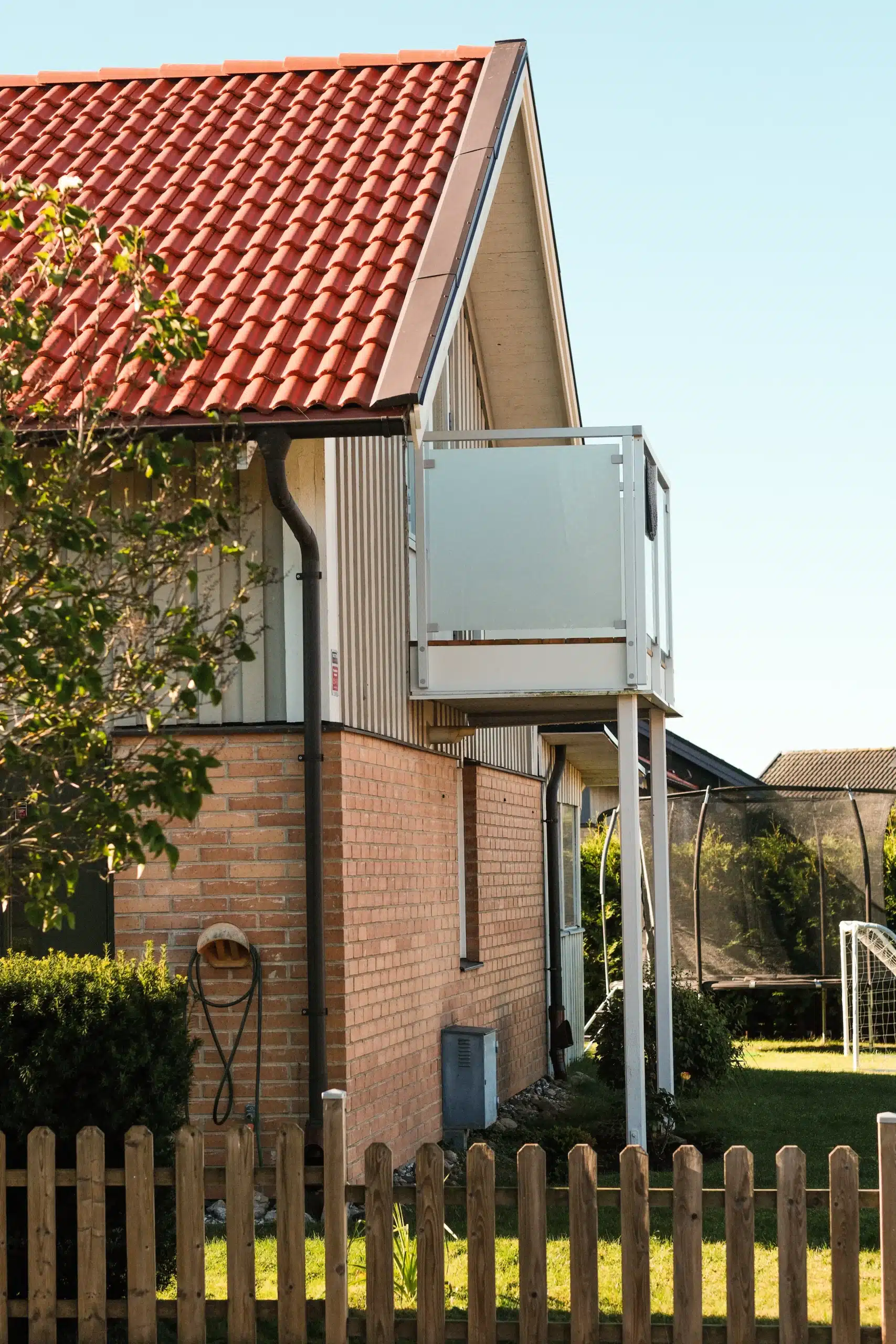
Opal glass, also known as frosted glass, is usually the best choice when you want to reduce visibility from the outside while maintaining natural light. It lets light through but makes it difficult to see details through the glass, and is suitable for balconies, patios, and densely populated areas. Tinted glass softens the light and slightly reduces visibility from the outside, but you can still see through it.
Clear glass provides the most light and the best view but offers almost no privacy. You can combine opal glass facing the neighbour or the street with clear glass where the view is most important. Keep in mind that tinted glass does not provide one-way privacy – in the evening, when it’s bright inside, it becomes easier to see through.
Yes, in many cases, you can install privacy screens on your balcony yourself, especially if you already have a glass balustrade with posts and clamps. The important thing is that the new glass fits the existing structure and does not compromise the balustrade’s safety. Often, it’s enough to simply replace the glass itself.
Make sure the width and height of the glass fit the distance between the posts, that the clamps and rubber inserts are designed for the glass thickness, and that the posts are stable. Opal glass provides the most privacy while still letting light through. Larger glass panels should be installed by two people, preferably using a glass lift. If you’re making changes beyond just replacing the glass, check the mounting first.
Use our 3D configurator to design a solution to your measurements and see how your choices affect its appearance and price. Depending on the product, you can select dimensions, materials, colours, glass, fixings and optional extras. The design is displayed in 3D and the price updates as you make changes.
When you create a quote, your configuration is saved so you can review dimensions and choices before ordering. The configurator is available for several product ranges, including balustrades, fencing, privacy screens and awnings. If you need help with measuring, materials or design, our customer service team can talk through your project before you order.
The glass in balustrades is designed to withstand normal temperature fluctuations between summer heat, cold, and frost. It may also flex slightly when subjected to wind, but this is not a sign of a problem. The extent to which the glass is affected depends on the type of glass, its size, how it is mounted, and the edge treatment. The glass is designed for outdoor use.
Large and rapid temperature changes place a greater strain on the glass than gradual changes – for example, when part of the glass is heated by the sun while the rest remains cold. Some movement in larger glass panels is normal in windy conditions and depends on the size, thickness, and mounting. Frost will not cause a correctly specified glass balustrade to crack – the key is that the glass, hardware, and mounting are suitable for the location.
Place privacy screening where neighbouring properties or passers-by can see into your space. You rarely need to screen the entire deck or balcony. First, identify whether you want privacy from a neighbour, the street, one side of the patio or from above. Screening one or two exposed sides is often enough.
Solid screening offers greater privacy, while spaced slats allow more light and an open feel. On sloping ground, the screen may need to follow different levels. A vertical screen helps prevent views from the side, but where neighbouring properties are higher up, additional overhead screening or solar shading may be needed. Choose only as much screening as you need.
No. Privacy screens and windbreaks serve different purposes, although one product can sometimes do both. A privacy screen reduces views into a space, while a windbreak provides shelter by reducing the wind reaching a deck, balcony or patio. The right choice depends on which issue matters most to you.
Position a privacy screen where people can see into your space and choose screening that provides sufficient privacy, such as frosted glass or closely spaced slats. A windbreak should be designed for the prevailing wind direction and height, with fixings suitable for the wind loads. Frosted or tinted glass can provide both shelter and privacy, while clear glass offers shelter without obstructing the view. Start with the problem you most want to solve.
A well-planned privacy screen shields your patio from neighbours, passers-by and the street, helping it feel like an extra outdoor room. We make each privacy screen to your measurements at our factory in Ängelholm, with dimensions designed to fit the space.
Frosted opal glass obscures views at typical distances between balconies or across a property boundary. It lets daylight through but makes it harder to distinguish shapes and details, unlike a solid timber fence. Grey-tinted glass reduces visibility to some extent without blocking the view entirely. The frosted interlayer is contained within the laminated glass, so its surfaces can be cleaned in the same way as clear glass.
A glass balustrade with opal or grey glass combines privacy screening, wind protection and a balustrade in one structure.
Retro has the classic appearance of wrought iron but is made from powder-coated aluminium. Closer slat spacing creates an elegant screen suited to period homes and traditional architecture. With Color, you can select the slat colour to complement your property.
With Flex, you control how much privacy you have. Lower the glass for an unobstructed view and raise it when you want more screening – useful when overlooking is only an issue from certain directions or at certain times.
Privacy screening blocks lines of sight and typically uses frosted or tinted glass or closely spaced slats. A windbreak reduces airflow, so clear glass can work just as well for shelter. If you need both privacy and wind protection, full-height opal or grey glass may be suitable.
We use powder-coated aluminium and corrosion-resistant stainless steel. Unlike bamboo, reed or timber screening mats, these systems are designed to last beyond a few seasons. Depending on the product, laminated safety glass is used. The manufacturing process is certified to EN 1090-1. RISE carries out ongoing production inspections, focusing on traceability, quality and the manufacturing process.
The price depends on the length, height and system you choose. Closely spaced aluminium slats are generally the lowest-cost option, followed by glass balustrades with opal glass, while height-adjustable Flex systems are at the higher end. The configurator updates the price as you make your selections, and the product is supplied as a complete kit with installation instructions.
Your basket will be emptied if you switch to another country.