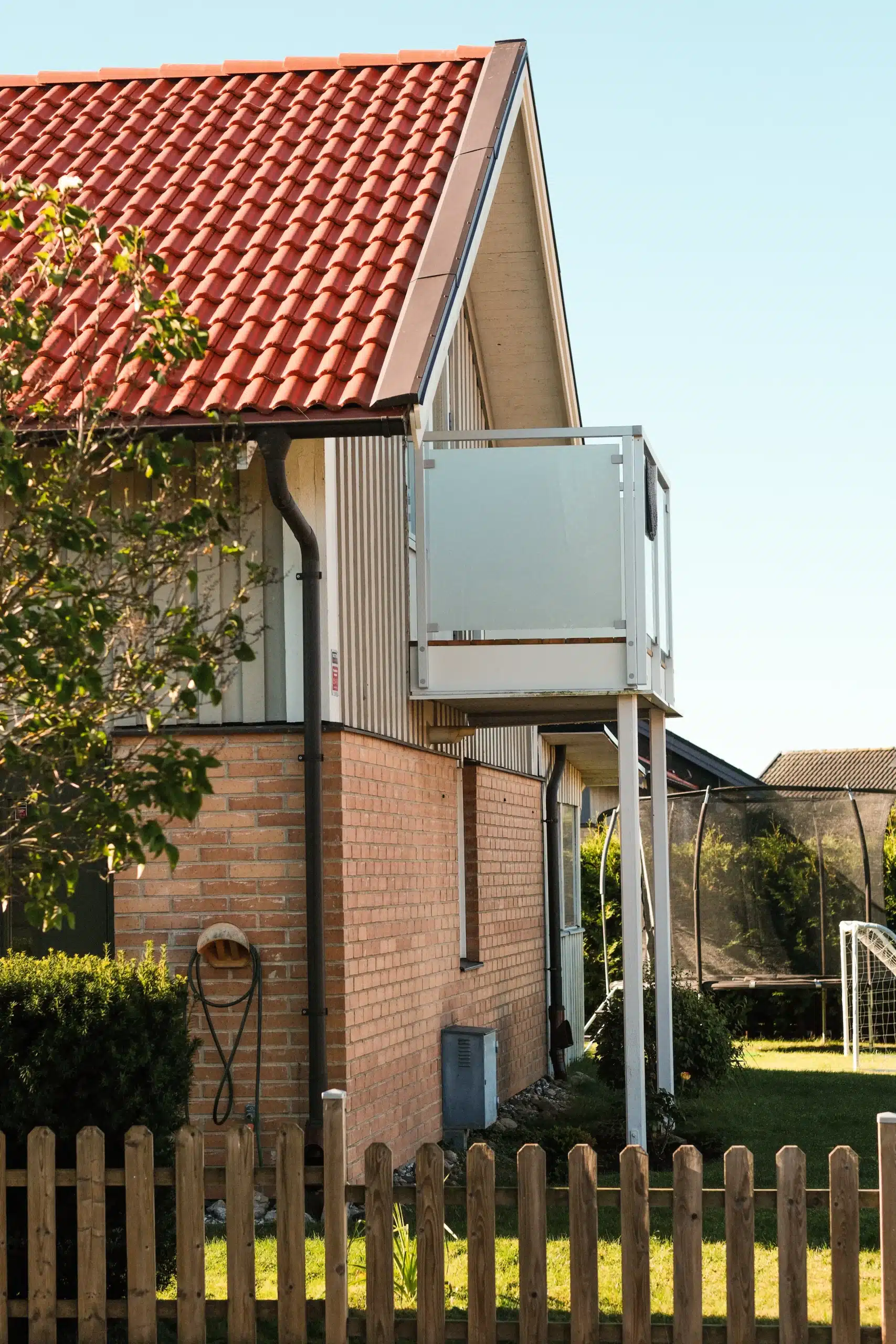
The right balcony balustrade combines safe fall protection with a material and design that suit the balcony’s view, light, overlooking, wind and architecture. The choice also needs to suit the position, size and substrate of the balcony and how the balustrade can be fixed.
A glass balustrade on a balcony is often suitable when you want to keep the view and create an open feel. Aluminium and stainless steel give other looks and properties, while opal glass, privacy screening and windbreaks can be important when the balcony is close to neighbours or in a more exposed position.
In this guide we cover material choices, glass balustrades, Juliet balconies, privacy screening, windbreaks, installation, rules in blocks of flats, safety and maintenance. You will also get help comparing the options and understanding what to check before choosing and ordering a balcony balustrade.
Table of Contents Jump directly to the right section of the guide
Quick answers Key points when choosing a balcony balustrade
Quick answers
Six things to consider when choosing a balcony balustrade
- Safety comes first. The balustrade must act as fall protection and be planned around the balcony’s height, openings, substrate and fixings.
- Glass is a good choice when views and light are important. Clear glass provides the most openness, while opal glass and other glass options can offer more privacy.
- The material affects both appearance and care. Glass, aluminium, and stainless steel offer different looks and have different cleaning and maintenance requirements.
- Location and weather influence the choice. Wind, privacy, sunlight, and the balcony's location determine how open or enclosed the balustrade should be.
- Installation must be planned around the structure. The balcony slab, façade, edge and existing connections affect how the balustrade can be fixed.
- Check rules and approval in good time. In flats and blocks of flats, the management company, building owner, planning permission and the design of the façade can affect what can be changed.
What factors determine which balcony balustrade is right for you?
Choosing the right balcony balustrade depends primarily on safety, the view, privacy, wind, and the installation conditions. Therefore, start by considering how you want to use the balcony before comparing materials, colours, or models.
Once the five questions below are clear, it is easier to decide whether glass, aluminium, stainless steel or a more screening solution suits the balcony best.
Start with the function – then choose the material
Safety and fall protection
Start with the fall risk, the design of the balustrade, openings and fixings. On a balcony, safety needs to be resolved before materials and look are decided.
View and Light
If you want to keep the view from the balcony, glass is often a natural choice. Clear glass gives the most openness, while posts and profiles affect how visible the balustrade is.
Overlooking and privacy
Neighbours, the street or a courtyard can make privacy screening important. Opal glass, grey glass or more solid sections can give more privacy without the balcony feeling closed in.
Wind and the balcony's location
A balcony high up or in an exposed position may need more screening. Glass can provide shelter while keeping light and views.
Façade, substrate and installation
The balustrade needs to suit both the structure of the balcony and the look of the building. In flats and blocks of flats, the requirements of the management company or building owner can also affect materials, colour and fixings.
How do location, view, and weather influence the choice of balcony balustrade?
The balcony's location affects how open or enclosed the balustrade should be. The view, wind, overlooking from outside, and height above the ground can therefore be at least as important as the material you choose.
A balcony with clear views may benefit from an open glass balustrade, while a balcony close to neighbours may need more screening. In high or exposed positions, windbreaks may also need to be considered as early as the balustrade planning stage.
Facing the view
Keep the light and view
If the balcony overlooks the water, a garden, the city, or open countryside, glass can be a good choice. The balustrade provides fall protection without taking up too much visual space.
Facing neighbours
Reduce overlooking without enclosing
If the balcony is located near other residences, a street, or a courtgarden, opal glass, grey glass, or other privacy screens can provide a greater sense of privacy while still allowing light to enter.
Facing the wind
Create shelter without sacrificing floor space
On upper floors and in open locations, the wind can make a small balcony difficult to use. Design the balustrade and screening so that they provide shelter without making the balcony feel heavy or confined.
Four questions to help you choose the right balustrade
Where does the wind come from?
Note whether the wind is coming mainly from the side, from the front, or around a corner.
What would you like to see?
The view, the sky, and the light may be worth preserving with a more open balustrade.
Where does the overlooking come from?
Streets, neighbouring buildings, and courtgardens may require different types of glass or screening.
How will the balcony be used?
Dining areas, lounge areas, and plants each have different requirements when it comes to views, shelter, and privacy.
How do the size and shape of the balcony affect which balustrade is best suited?
The size and shape of the balcony affect both how the balustrade is perceived and how much usable space remains. On a narrow balcony, a visually light balustrade is often a good fit, while a larger balcony can accommodate a more striking design.
So don’t just measure the total length. Corners, wall connections, the depth of the balcony and the position of furniture also affect the choice. Once you have the measurements, you can use our balustrade design tool to build a solution based on the dimensions and shape of the balcony.
Three measurements and factors to check
A made-to-measure balcony balustrade needs to be planned around the whole geometry of the balcony, not just the total width.
Total length
Measure each section where the balustrade will be installed. If the balcony has multiple sides, each side should be measured separately.
Corners and end details
Check angles, columns, wall connections, and other façade elements that affect where the balustrade can begin and end.
Depth and Furnishings
Take into account walking space, doors, furniture, and plants. On small balconies, even a few centimetres can affect how the space can be used.
Adapt the balustrade to the actual shape of the space
Narrow balcony
Glass can let in light and make a narrow balcony appear larger. Avoid designs that protrude unnecessarily inward and reduce the usable floor space.
Corner balcony
A corner balcony can be exposed to both wind and overlooking from several directions. It may therefore be wise to combine open sections with more private areas.
Deep balcony
If there is room for a table, a seating area, and plants, the balustrade can be customised depending on where a view, privacy, or a greater sense of space is needed.
Balcony on a façade
In blocks of flats, the colour, materials and proportions of the balustrade often need to work with the façade, windows and other balconies.
Which balcony balustrade is the best fit?
The best balcony balustrade depends on what you want to prioritise: views, low maintenance, a clearer material look or more privacy. The position of the balcony, the façade and the possibility of secure fixing also need to be taken into account.
Glass, aluminium, and stainless steel are not always entirely separate options. For example, a glass balustrade may feature posts, profiles, or top rail made of aluminium or stainless steel. Therefore, compare the entire balustrade system and base your decision on which feature is most important for your specific balcony.
View and Light
Glass balustrade
Ideal when you want to preserve the view and have the balustrade take up as little visual space as possible. Clear glass provides the greatest sense of openness, while other glass options can offer more privacy.
Low maintenance
Aluminium balustrade
Suitable when you want an easy-care balustrade with a clean look. Powder-coated profiles can be colour-matched to work with the façade, windows and doors.
A stronger feel of the material
Stainless Steel Balustrades
Ideal when you want the metal to be a visible part of the balcony’s design. Stainless steel can be combined with glass when you want to preserve light and views while giving the balustrade a more metallic look.
More privacy
Screening solution
Suitable when overlooking or wind is more of a problem than the view is an attraction. Opal glass, grey glass or more solid sections can be placed where the need is greatest without the whole balcony feeling closed in.
Start with what's most important on your balcony
Choose an open glass balustrade and adapt the glass to how much privacy you need.
Add more screening where it's needed most and keep the areas more open where you still want light and a view.
Choose colours, profiles, and materials that work well with the building and the other balconies.
When is a glass balustrade suitable for a balcony?
A glass balustrade is especially suitable on balconies where you want to keep views, daylight and an open feel. It can be particularly valuable on a smaller balcony, or where a more solid balustrade would otherwise block the view from your home.
How open the balustrade feels depends on both the balustrade system and the look of the glass. In our range of glass balustrades you will find solutions for prioritising a clear view or more privacy. Exact glass options depend on the balustrade system you choose.
How much of a view and how much privacy do you want?
Start by considering what the glass will be used for on your specific balcony. The difference between the options is most noticeable in terms of visibility, light, and how secluded the space feels.
Clear glass
Ideal when you want a clear view through the balustrade and want the balcony's view and natural light to be as prominent as possible.
Opal glass
Opal glass lets daylight through but obscures the view through the glass. It is therefore well-suited for use facing neighbours, the street, or a courtgarden.
Grey glass
Grey glass gives a darker, more defined look than clear glass. How much overlooking is perceived depends on the light, viewing angle and surroundings.
What kind of glass is best for the balcony?
| Glass Selection | Best suited for when | View | Privacy Screens |
|---|---|---|---|
| Clear glass | You want to prioritise an unobstructed view and natural light | High | Low |
| Opal glass | You want to screen against neighbours, the street or a courtyard | Low | High |
| Grey glass | You want a darker, more defined glass look | Medium | Medium |
When are aluminium or stainless steel balustrades suitable for a balcony?
An aluminium balustrade is often suitable when you want an easy-care, colour-matched balcony balustrade with a clean, understated look. A stainless steel balustrade suits balconies where the metal can be a clearer part of the architecture and feel of the materials.
Glass is a common infill on balconies, but the choice of material also concerns posts, profiles, fixings and top rails. Aluminium or stainless steel therefore affects the look of the balustrade, its maintenance and how well it suits the façade and setting where it will be installed.
Easy care and simple to colour-match
Aluminium suits balconies where you want low maintenance, low weight and a clean look. Powder-coated profiles can be colour-matched, making it easier to coordinate the balustrade with the façade, windows, doors and other details of the building.
- Suitable when the balcony balustrade should feel discreet and modern.
- Colours and profiles can be customised to match the building's aesthetic.
- Usually requires mainly cleaning to keep the surface clean.
A more pronounced metallic look
Stainless steel is suitable when posts, top rails and other visible details can be a clearer part of the balcony balustrade’s look. It can be combined with glass when you want to keep light and views while giving the balustrade more metallic character.
- Ideal when you want the metal to be visible in the balustrade's design.
- Can be combined with glass when you want to preserve the view.
- Materials and surface treatments should be adapted to the environment, especially in locations exposed to salt or chlorine.
What is the difference between glass, aluminium and stainless steel balustrades?
The difference lies mainly in what dominates the function and look of the balustrade. A glass balustrade suits you when views and light matter most, aluminium when low maintenance and colour matching matter most, and stainless steel when the metal can be a clearer part of the balcony’s look.
The terms can also overlap. A glass balustrade can have posts, profiles or top rails in aluminium or stainless steel. In the comparison below, glass balustrade therefore means a solution where the glass dominates, while aluminium and stainless steel balustrades describe solutions where that metal is a clearer part of the structure and look.
| Property | Glass balustrade | Aluminium balustrade | Stainless Steel Balustrades |
|---|---|---|---|
| View and Light | The glass surface dominates and provides an unobstructed view through large sections of the balustrade | Depends on the infill – it can be open or combined with glass | It depends on the design of the balustrade and whether it is combined with glass |
| Overlooking | Can be customised with, for example, clear, opal, or grey glass | Can be combined with glass or more opaque sections | Mainly determined by the infill and how open the system is |
| Wind and Location | A larger, continuous glass surface can provide more protection against the wind | Profiles and infills can be customised based on the balcony's function and location | The quality of the materials and the workmanship must be adapted to the environment where the balustrade will be installed |
| Care | The glass should be cleaned as needed to maintain a clear appearance | Powder-coated surfaces usually need only cleaning as required | Must be cleaned and maintained based on the environment and the surface's exposure |
| Colour and look | Visually light, with the glass taking centre stage | Easy to customise the colour with powder-coated profiles | A clearer metallic look and a stronger feel of the material |
| Best suited for when | Views, natural light, and a sense of openness are the most important factors | You prioritise low-maintenance, colour, and a clean look | You want the metal to be a prominent part of the balustrade's design |
Choose a glass balustrade when views and light matter most, an aluminium balustrade when low maintenance and colour matching matter most, and a stainless steel balustrade when you want a clearer metallic look.
How do you safely install and secure a balcony balustrade?
A balcony balustrade is installed safely by adapting the fixings to the load-bearing substrate, the structure of the balcony and how the balustrade meets the floor, edge or façade. The substrate and fixings must therefore be clear before installation starts.
Also check dimensions, corners, wall connections, waterproofing, drainage and other details that may affect the position. Posts, glass, profiles and fixings need to work as a whole on that particular balcony.
Check these three points first
-
Check the substrate
Find out whether the balustrade will be fixed to concrete, steel, timber, the façade or an existing balcony structure, for example. The make-up of the substrate determines which fixings are possible.
-
Measure openings and end details
Measure the balcony's lengths, corners, wall connections, and clear openings. Also take into account doors, thresholds, drainage, and details on the façade.
-
Plan posts, glass, and connections
The positioning of posts, glass, profiles, and fixings must work in harmony with the balcony's shape. Pay special attention to corners, short sides, and connections to the wall.
Which fixing method is suitable for the balcony's construction?
The choice depends on where suitable load-bearing material is available and how the balustrade will connect to the balcony floor, edge, façade, or an existing structure.
Top-mounted fixing
The balustrade is fixed on top of a suitable load-bearing substrate. Check the make-up of the substrate and how the fixings affect waterproofing and drainage.
Side-mounted fixing
The balustrade is attached to the edge or side of the balcony. This can free up floor space, but requires that the edge be accessible and suitable for the specific fixing.
Installation on an existing structure
If the balustrade is to be attached to a façade, balcony front, existing balustrade, or other structure, the materials, load-bearing capacity, and connection must be verified before planning the installation.
What applies to balcony balustrades in flats and blocks of flats?
In a flat or block of flats, you first need to establish whether the management company or building owner approves the change and whether the new balcony balustrade affects the building’s façade in a way that requires planning permission.
Replacing a balustrade can count as an alteration to the façade. Whether planning permission is required depends on the building, the position of the façade and local rules. Conservation areas and special rules for the area can also affect what applies. So check the conditions before deciding on materials, glass, colour and fixings.
Start with approval and prerequisites
A balcony balustrade is a prominent part of a building’s exterior. So check both who can decide on the change and which requirements apply to the property before ordering the balustrade.
Management company or building owner
Check whether the management company or building owner needs to approve changing or replacing the balcony balustrade and whether there are agreed requirements for the specification.
The Appearance of the Façade
Find out whether colour, glass, posts, profiles or top rails need to match existing balconies and the architecture of the building.
Façade alterations and planning permission
Replacing a balustrade can count as an alteration to the façade. Whether planning permission is required depends on the building, the position of the façade and local rules. Listed buildings or conservation areas may have additional requirements. Contact your local planning authority if you are unsure.
Design and fixings
Ensure that the installation and fixings are compatible with the balcony's existing structure, waterproofing, connections, and other building components.
What information is useful to have ready?
Photos, measurements, and information about the property's requirements make it easier to assess which solution will work before a balcony balustrade is ordered.
Pictures
Take photos of the existing balcony balustrade, façade, wall connections, balcony edge, and visible fixings.
Dimensions
Get the measurements of the balustrade runs, height, corners, wall connections and other parts that affect its position.
Desired design
Gather your preferences for materials, glass, colour and the overall look of the balustrade so they can be compared with the building’s requirements.
Requirements and approvals
Get the relevant answers from the management company, building owner or local planning authority before the final solution is decided.
When is a Juliet balcony needed for fall protection?
A Juliet balcony is used in front of an opening door or full-height window where there is no traditional balcony outside. The balustrade acts as fixed fall protection in front of the opening while keeping the daylight and the look of the façade.
Materials, the size of the opening and the possibility of secure fixing determine how the solution needs to be designed. In the Juliet balconies category you will find glass and aluminium solutions for different looks and conditions.
Fall protection without a projecting balcony
The Juliet balcony is placed in front of the opening and needs to work with the façade, the width of the opening and the substrate the balustrade will be fixed to. Unlike a normal balcony, it does not create any floor space outside the door or window.
- Works well in front of full-height doors and windows.
- Provides fixed fall protection without a projecting balcony slab.
- Can be designed to allow light and visibility through the opening.
- Needs to be made to measure for the opening and the conditions of the façade.
Glass or aluminium – which is best for the façade?
Glass
Glass is a good choice when you want fall protection to take up little visual space and allow light and the view through the opening to be prominent.
Aluminium
Aluminium is a good choice when you want the balustrade to be a more prominent feature of the façade. The colour and design can be customised to complement the building’s other details.
Check the opening, façade, and fixing
Dimensions of the opening
Measure the width of the door or window and check how much space there is on both sides of the opening.
The Structure of the Façade
Find out what material there is where the balustrade will be installed and whether cladding or other details affect its position.
Fixing
The balustrade must be anchored to a suitable load-bearing surface. Therefore, plan fixing along with the balustrade's dimensions and positioning before placing your order.
How do you choose privacy screening for your balcony?
Choose privacy screening based on where the overlooking actually comes from and how much light and view you want to keep. On a balcony, the best result often comes from screening the most exposed side instead of enclosing the whole area.
Clear glass preserves the view and lets in light, while opal glass and grey glass can provide more privacy. If you want to create a stronger sense of privacy, a separate privacy screen for the balcony may be a better option than trying to meet all your needs with the balustrade glass alone.
Clear glass
Suitable when views, daylight and an open feel matter more than privacy. Clear glass defines the balcony without blocking the view, but gives little screening from neighbours, a courtyard or footpaths.
Opal glass or grey glass
Opal glass is a good choice when you want to limit visibility through the balustrade but still allow light to pass through. Grey glass creates a darker look and can reduce visibility from certain angles, but does not provide the same level of privacy as opal glass.
More solid privacy screening
Ideal when your balcony is close to a neighbour’s balcony, a street, a walkway, or a courtgarden, and you need more privacy. On smaller balconies, it’s often enough to screen off the side where visibility is greatest, so that the rest of the balcony can retain as much light, view, and openness as possible.
How do you choose a windbreak for your balcony?
Choose a windbreak based on where the wind is most troublesome, how much view you want to keep and how the windbreak can be fixed to the balcony structure. It is often enough to shelter the most exposed side instead of screening the whole balcony.
Glass works well when you want more shelter without taking up floor space or shutting out the light. Clear glass keeps the view, while opal or grey glass can give more privacy where the balcony is also overlooked.
Start with the prevailing wind direction
Find out which side the wind is most troublesome from. On a corner balcony or an exposed balcony, the wind can come from several directions, but that does not mean the whole balcony needs to be screened.
Choose glass based on the view and privacy
Clear glass is a good choice when you want to reduce draughts while still letting in as much light and offering as much of a view as possible. Opal glass or grey glass is a good choice when you also want to create more privacy on the balcony.
Plan the fixings and end details
The windbreak needs to work together with the balustrade and the existing structure. On high or exposed balconies, the position, fixings and how the windbreak is finished become especially important when the solution is exposed to wind.
Which rules and safety requirements apply to balcony balustrades?
A balcony balustrade needs to protect against falls where there is a risk of injury. How high it needs to be and how it is designed depend on how the balcony is used, how high the drop is and which building regulations apply on site. So there is no single measurement that suits every balcony.
In areas where young children are present, there are often additional requirements ensuring that the balustrade prevents climbing and that the openings are designed so that children cannot fall through or get stuck. Therefore, check the specific requirements for the location before selecting and ordering a balustrade.
Four things to keep a close eye on
Requirements vary by location and are subject to change. Use these points as a checklist when comparing balustrades, and then check what applies to your property.
The design needs to prevent climbing
The lower part of the balustrade must be designed so that younger children cannot easily climb up. For example, avoid horizontal sections that can be used as steps.
Vertical openings need to be narrow
Gaps between balusters, glass and other components must be narrow enough that young children cannot squeeze through. Check the size of openings permitted at the site.
Keep the gap at floor level small
The space between the bottom of the balustrade and the balcony floor needs to be small enough so that young children cannot slip under the balustrade or get stuck. Check the regulations for your specific location.
Avoid gaps where a child’s head could become trapped
Horizontal openings of certain sizes can cause a child to get their head stuck. Check which sizes the local building regulations identify as high-risk and avoid them.
How do you maintain a balcony balustrade?
Maintain balcony balustrade by cleaning the surfaces as needed, checking fixings, and keeping an eye out for changes in the glass, posts, profiles, and other parts. How often this is needed depends, among other things, on the materials and how exposed the balcony is to dirt, precipitation, and salt.
A quick check every now and then makes it easier to spot dirt, loose parts, or other changes before they have a chance to become bigger problems.
Balconies near the sea, busy roads or other places where the balustrade is exposed to more dirt or salt may need cleaning and checking more often.
-
Clean the balustrade
Wash away dirt, pollen, dust, and other deposits from glass, posts, profiles, and top rail using methods appropriate for the material.
-
Check fixings
Check to see if any screws, fittings, posts, or other fixings seem loose, have changed, or need to be inspected more closely.
-
Inspect the glass and infill panels
Check that glass, panels, or other infill panels are securely in place and that you do not see any damage or changes that need to be assessed.
-
Be extra careful in exposed locations
Balconies near the sea, busy roads or other places where the balustrade is exposed to more dirt or salt may need cleaning and checking more often.
What should you consider for different balustrades?
Glass
Clean the glass as needed with water and a suitable cleaning agent. At the same time, check edges, clamps and other joints to make sure the glass is secure.
Aluminium
Powder-coated aluminium surfaces usually just need keeping clean. Wash off dirt and deposits and check the surface if you notice scratches, damage or other changes.
Stainless steel
Stainless steel surfaces also need to be cleaned, especially in environments with salt or other deposits. Remove dirt from posts, top rail, and fixings, and follow up if discolouration or deposits occur.
What style suits the balcony and the balcony balustrade?
The style that works best depends on how the balcony is used and the atmosphere you want to create. The view, the size of the balcony, the need for privacy screen, and how the balustrade meets the façade all influence whether the design should feel light and unobtrusive or more enclosed and cosy.
Let the balcony balustrade pick up materials, colours or lines already found on the house. Clear glass can enhance the view and daylight, while opal glass, grey glass, aluminium and additional privacy screening can create a more screened or defined look.
Keep the balustrade as visually unobtrusive as possible
If the balcony overlooks water, trees, the city, or open countryside, a balustrade that preserves the view and lets in plenty of light is a good choice.
Clear glass, narrow profiles, or a frameless glass balustrade is often a good choice when the view should be the focal point.
Create Space with Simple Choices
On a small balcony, the balustrade affects how spacious and airy the space feels. A transparent or visually light balustrade makes the boundary with the surroundings feel less imposing.
Glass balustrades, sleek furniture, and plants placed near a wall or on the floor help maintain a sense of space.
Screen without enclosing
If the balcony is close to neighbours, a street, or a courtgarden, you need to balance privacy with light and views. Start on the side where visibility is greatest, rather than enclosing the entire balcony.
Opal glass, grey glass, privacy screening and plants can together create a more private feel.
Let the balustrade provide a subtle backdrop
If you want your balcony to feel softer and cosier, the balustrade can serve as a neutral base, while plants, textiles, lighting, and small pieces of furniture add character.
Place larger pots on the floor and avoid solutions that put strain on, rub against, or affect the balcony balustrade.
How do you choose and order the right balcony balustrade?
Start by checking what you are allowed to change, measure the balcony and find out what substrate the balustrade will be fixed to. You can then choose materials, glass and design based on safety, views, overlooking and how the balcony balustrade should suit the façade.
Once you have made your choices, use the measurements and information to build your order. Check every run, corner, connection and product choice before completing the order, so that the balustrade, fixings and balcony conditions match.
Check these eight points
-
Check what you're allowed to change
If you live in a flat or block of flats, you need to know which requirements apply to the balcony balustrade, façade, colour and any changes before you order.
-
Measure the entire balcony
Check the lengths, height, corners, openings, wall connections, and clearances. Also take into account doors, thresholds, and other details near the balustrade.
-
Determine the type of substrate to which the balustrade will be attached
Concrete, steel, wood, balcony edges, and existing structures may require different fixings. The substrate must therefore be identified before planning the balustrade and its installation.
-
Decide which function matters most
Consider whether the balcony balustrade should mainly keep the view, create more privacy, provide shelter or make a clearer statement on the façade.
-
Choose glass based on light, views, and privacy
Clear glass is ideal when you want to preserve light and views. Opal glass provides more privacy, while grey glass can create a darker and more distinct look.
-
Match the materials and colour to the house
Glass, aluminium, stainless steel, profiles, and colours should complement the windows, doors, façade, and other details of the building.
-
Check for safety and openings
Ensure that the height, openings, and design of the balcony balustrade are appropriate for the fall risk at that location and meet the requirements where young children may be present.
-
Gather the necessary information before placing your order
Have the measurements, photos, material choices and information about the fixings to hand. This makes it easier to check that the balcony balustrade suits both the structure and the look you want.
How to proceed once you have the information
-
1
Collect measurements and product selections
Have the balcony runs, corners and connections in front of you, together with your chosen material, glass type, colour and planned fixings, when you build your order.
-
2
Add the balustrade using the balcony's measurements
Start from the measurements you took and check every run, corner and end. Pay particular attention to connections to walls and other parts where the dimensions affect how the balustrade will fit.
-
3
Check your order one last time
Compare dimensions, materials, glass, colour and fixings with your original information before completing the order. Also check that any requirements from the management company, building owner or local planning authority have been met.
Which type of balcony balustrade is best suited for your balcony?
Compare our balustrades based on material, views and how much screening you want. If you need help choosing, our customer service team can help.
What are the most common questions about balcony balustrades?
Common questions concern which balcony balustrade suits best, glass balustrades on balconies, balustrade height, rules in blocks of flats, privacy screening, wind and which measurements you need before you order.
Which type of balcony balustrade should I choose?
Start with the view, overlooking, wind, size of the balcony and the look of the façade. A glass balustrade suits you when you want to keep light and views, aluminium when low maintenance and colour matching matter most, and stainless steel when you want a clearer metallic look.
Can you have a glass balustrade on a balcony?
Yes. Glass balustrades work well on balconies where you want to keep daylight and views. The glass, posts or profiles, fittings, fixings and the load-bearing structure must work together as a safe balustrade system.
How tall should a balcony balustrade be?
There is no single height that works for all balconies. The height of the fall protection must be adapted to the balcony’s use, drop height, and local building regulations. Where young children may be present, there may also be special requirements regarding climbing and openings.
Do I need planning permission to replace a balcony balustrade?
It depends on the building, the location, and the extent to which the change affects the character of the façade. Replacing a balustrade may be considered a façade alteration, and the regulations vary by location. Contact your local planning authority before changing the appearance of the balustrade.
Can I replace my balcony balustrade if I live in a flat?
Always check with the management company or building owner before changing or replacing a balcony balustrade. They may have requirements for materials, glass, colour and design, for example, so that the balconies work with the building’s façade.
Which glass is best for a balcony balustrade?
Clear glass is ideal when the view and natural light are the top priorities. Opal glass provides more privacy, while grey glass creates a darker look and can reduce visibility from certain angles. The choice should therefore be based on the view, visibility, and the building’s façade.
Can a balcony balustrade provide privacy screening?
Yes. Opal glass can provide clearer screening while still letting light through. Where more privacy is needed, the balustrade can be combined with more solid privacy screening on the most exposed side.
Can a balcony balustrade provide shelter from the wind?
A glass balustrade can reduce wind and draughts, but how much shelter it gives depends on the position of the balcony, the wind direction, the height of the balustrade and how open the area around the balcony is. If more shelter is needed, the balustrade may need to be combined with a separate windbreak.
How do I take measurements for a new balcony balustrade?
Measure the lengths, corners, openings, ends and wall connections of the balcony. Also check where the balustrade will be fixed and what the substrate is, and it helps to photograph the balcony and existing fixings.