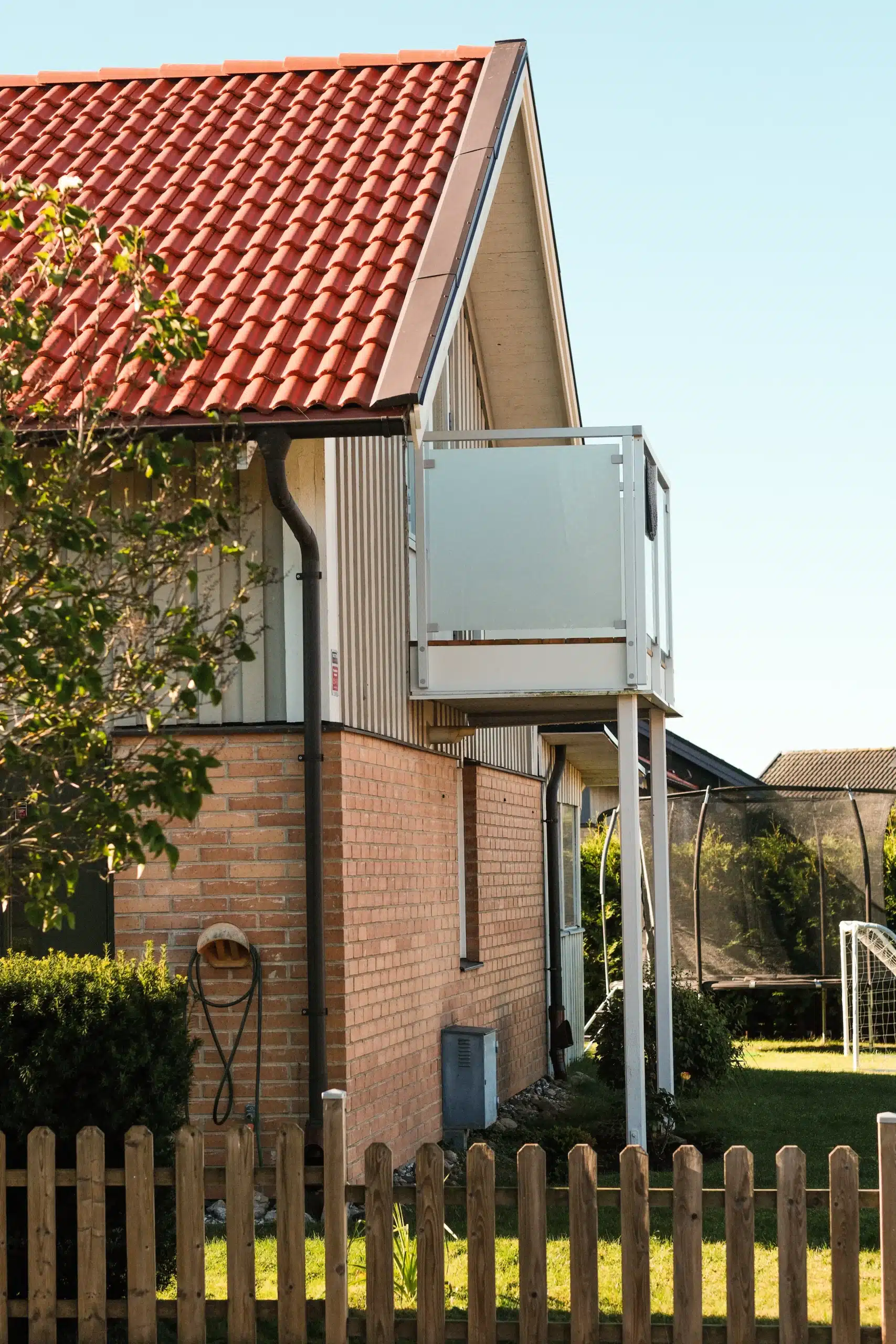
We're here to help you with everything related to your balustrade project – from technical questions and assistance with taking measurements to information about your delivery.
Our goal is for you to feel completely confident throughout the process, whether you have just started planning or your balustrade is already in place.
We offer services that make your choice easier, such as personal balustrade advice and installation guidance.
Find installation instructions, specifications and catalogues for our balustrades.
A balustrade can be installed on a variety of surfaces, but fixing must always be anchored to a stable, load-bearing structure – not just to the material visible on the surface. The correct fixing depends on the surface, balustrade system, and the structure’s design. On timber and composite decking, posts must be anchored to the load-bearing joists beneath the boards.
Concrete and solid stone may provide suitable fixing points if their condition and load capacity are confirmed. Brick and lightweight concrete need anchors designed for the specific substrate. Avoid loose paving slabs, weak joints and unsuitable edge distances.
You choose the right glass balustrade based on its location, the view, the desired look, and the requirements the balustrade must meet. Glass balustrades work both indoors and outdoors and can be installed with posts, clamps, or as frameless systems. Frameless systems offer the best view, while posts can become a distinctive part of the design.
Clear glass preserves the view, while opal or tinted glass provides more privacy. Outdoors and in coastal areas, hardware, profiles, and metal components must be able to withstand the environment. Consider the glass, fixings, and load-bearing components as a complete system, especially where the balustrade provides fall protection.
The best balustrade for your deck depends on the view, the style of your home, how much privacy you want and the maintenance you are prepared to carry out. No single material or design is right for every deck, so start with what you need the balustrade to do. The right design helps make your deck a space you enjoy using.
Glass preserves the view and creates an open feel, while aluminium is relatively easy to maintain and comes in a range of colours and infill options. Vertical bars create a light appearance, and wrought-iron-style designs can suit a traditional home. If you mainly want to define the edge, you may not need a solid windbreak. On a smaller deck, a visually light balustrade can help the space feel open.
Many of our balustrades are designed for self-installation. Measure carefully, follow the installation instructions and make sure all fixings are anchored to a stable, load-bearing structure. How straightforward the installation is will depend on the type of balustrade, the substrate and its location.
Check measurements and the substrate before starting, and mark the positions of posts and brackets. Install and align the posts or profiles before fully tightening the fixings, then fit the infill and retighten all fixings when complete. Larger glass panels should be handled by two people, ideally using glass lifters. Stairs, corners and slopes need extra care when measuring.
No. Privacy screens and windbreaks serve different purposes, although one product can sometimes do both. A privacy screen reduces views into a space, while a windbreak provides shelter by reducing the wind reaching a deck, balcony or patio. The right choice depends on which issue matters most to you.
Position a privacy screen where people can see into your space and choose screening that provides sufficient privacy, such as frosted glass or closely spaced slats. A windbreak should be designed for the prevailing wind direction and height, with fixings suitable for the wind loads. Frosted or tinted glass can provide both shelter and privacy, while clear glass offers shelter without obstructing the view. Start with the problem you most want to solve.
The easiest way to clean a glass balustrade is with lukewarm water, a mild detergent, and a soft microfiber cloth or window squeegee. Avoid strong or abrasive cleaners, which can damage the surface of the glass or the balustrade’s hardware. How often this is necessary depends on the location. Near the sea, roads, or areas with high pollen counts, the balustrade may need to be washed more often.
A nano-coating makes the glass more water-repellent, so dirt and limescale don’t stick as easily, but it doesn’t replace cleaning. Also wipe down the clamps and hardware – stainless steel ones with water and a mild detergent, painted ones with a soft cloth – and check at the same time that they’re securely fastened.
Yes, different materials and balustrade types can be combined in the same project, provided the components are technically compatible and the complete construction works as intended. Glass, aluminium, stainless steel and timber can be combined to achieve the desired function and appearance.
Glass and aluminium create a light, open appearance; glass and stainless steel combine clear views with visible metal details; and timber adds warmth to metal designs. You can also combine functions – for example, a taller glass section acting as a windbreak on the most exposed side of a deck, with a more open balustrade on the remaining sides. Materials, heights and fixings must work together.
A motor is a good choice if you want to extend and retract the awning quickly and easily, while a manual crank is a simpler option that doesn’t require a motor or electricity. Both provide the same amount of shade – the difference lies in convenience, ease of use, and price. Our patio awnings are available with both a motor and a manual crank.
The motor is concealed in the roller tube and is controlled by remote, which is convenient for larger awnings and when the awning is adjusted several times a day. The motor also allows for automatic operation using sun and wind sensors. A manual crank is reliable and often has a lower purchase price, making it suitable for a smaller awning that is used occasionally.
Here you can find inspiration about our products, and by clicking in the catalogue, you'll be taken to the product you want to learn more about.
You are very welcome to visit our showroom in Ängelholm to see and touch our products and get advice. Book an appointment via the link below or call us on 0330 8187964.
Your basket will be emptied if you switch to another country.