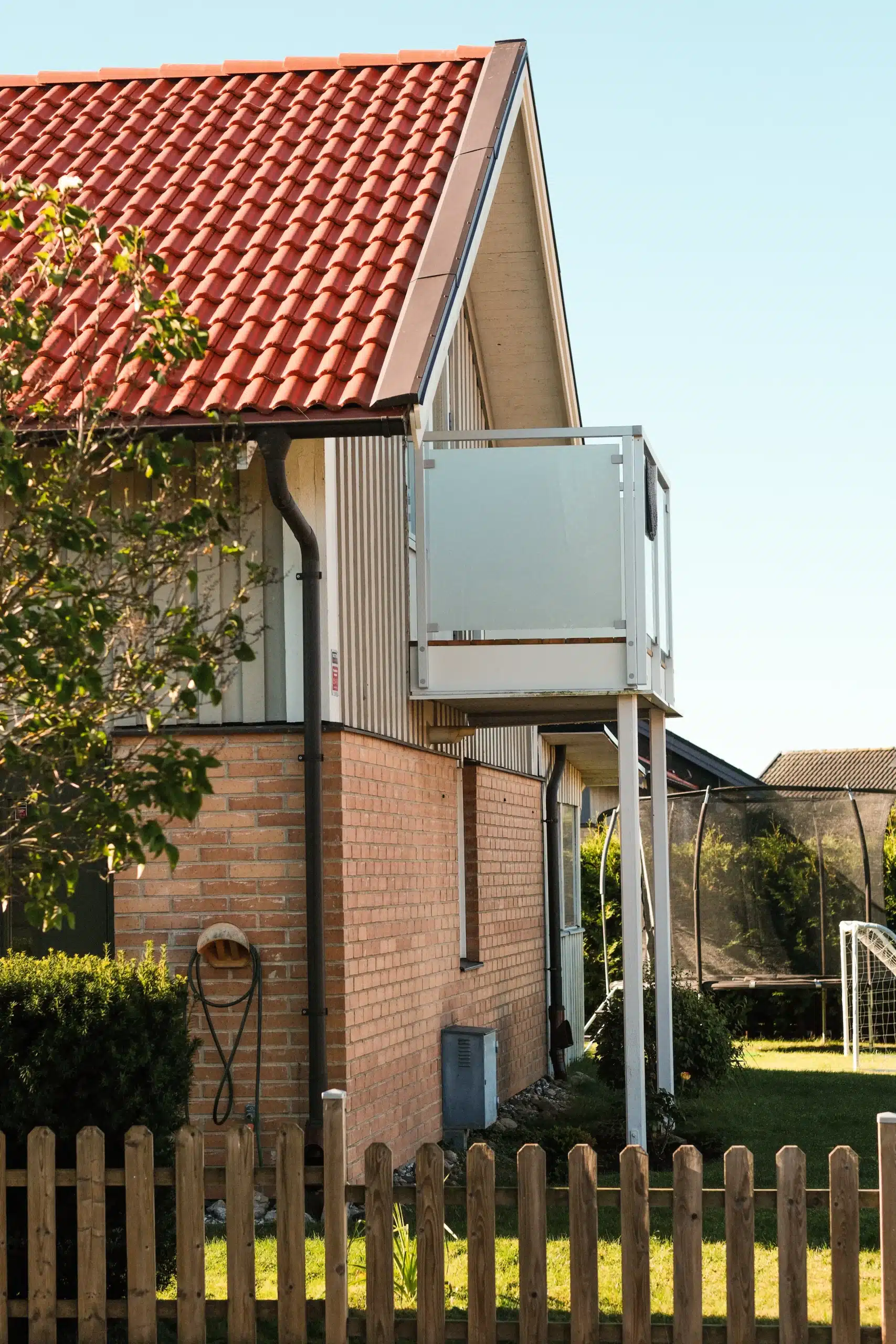
Choose a wire balustrade for your patio or balcony when you want to preserve the view, let light in, and make the space feel as open as possible. Wire is best suited for areas where an unobstructed view is more important than windbreak and privacy screen.
The right solution therefore depends on the specific needs of the space. On a raised deck with an unobstructed view, the thin wires can be an advantage, while a wind-exposed patio often requires glass, and a balcony exposed to overlooking may call for a more privacy-oriented solution.
In this article, we’ll go over when a wire balustrade is suitable for decks and balconies, how it differs from glass and more solid balustrades, and what you need to consider regarding fixing, corners, timber top rail, wire tension, and maintenance before choosing a solution.
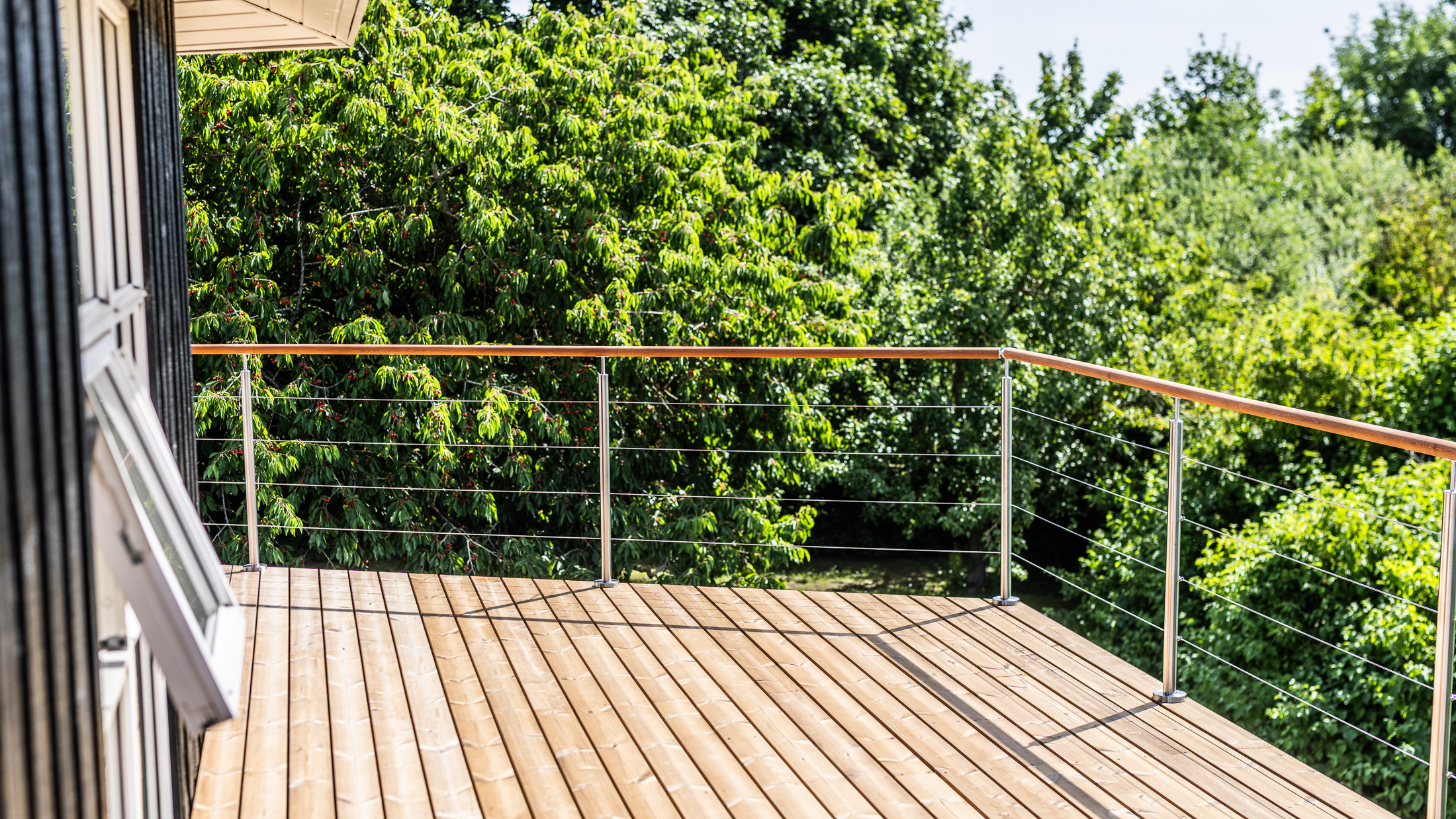
Which balustrade is best suited for different locations and needs?
On a raised deck with an unobstructed view, a wire balustrade often works well because it takes up little visual space. On a wind-exposed patio, glass is a better choice, while a balcony that is exposed to overlooking may require frosted glass or a more solid balustrade solution.
| Location | Common problem | A solution that often works |
|---|---|---|
| Elevated deck with a view | The balustrade blocks the view | Wire balustrade |
| Wind-exposed patio | Wind makes the surface difficult to use | Glass balustrade |
| Balcony facing a neighbouring property | Overlooking at seated eye level | Frosted glass or a more closely spaced balustrade |
| Deck in a shaded location | Not enough light | Wire balustrade or clear glass |
| Older houses | A modern balustrade might clash with the style | Wrought iron balustrade or vertical-bar balustrade |
| Dock and waterfront property | Salt and moisture pose greater challenges | Wire balustrade in marine-grade stainless steel |
The table is a simplified guide. Wire and glass can both preserve the view, but wire lets the wind through, while glass can also provide shelter.
Which types of balustrade are suitable for decking and balconies?
Wire balustrades are a good choice when an unobstructed view and an airy appearance matter most. Glass balustrades are better suited when you also need shelter from the wind. Vertical-bar balustrades offer a more traditional look, while slatted balustrades can provide greater privacy.
- Wire balustrade
- Thin horizontal lines between posts take up little visual space and allow both light and wind to pass through. Wire is therefore a good fit where the view is an important part of the deck or balcony experience.
- Glass balustrade
- A glass balustrade preserves the view while the glass surface provides shelter. The glass is more visible than wire and needs to be cleaned when rain, pollen, and dirt become visible.
- Bar balustrade
- Vertical balusters break up the view more but give a clearer, more traditional look. This can suit older houses or façades where a classic balustrade fits the architecture.
- Slatted balustrade
- A denser construction can give more screening and act as a privacy screen. It suits best when privacy matters more than a completely clear view through the balustrade.
When is wire balustrade suitable for a raised deck?
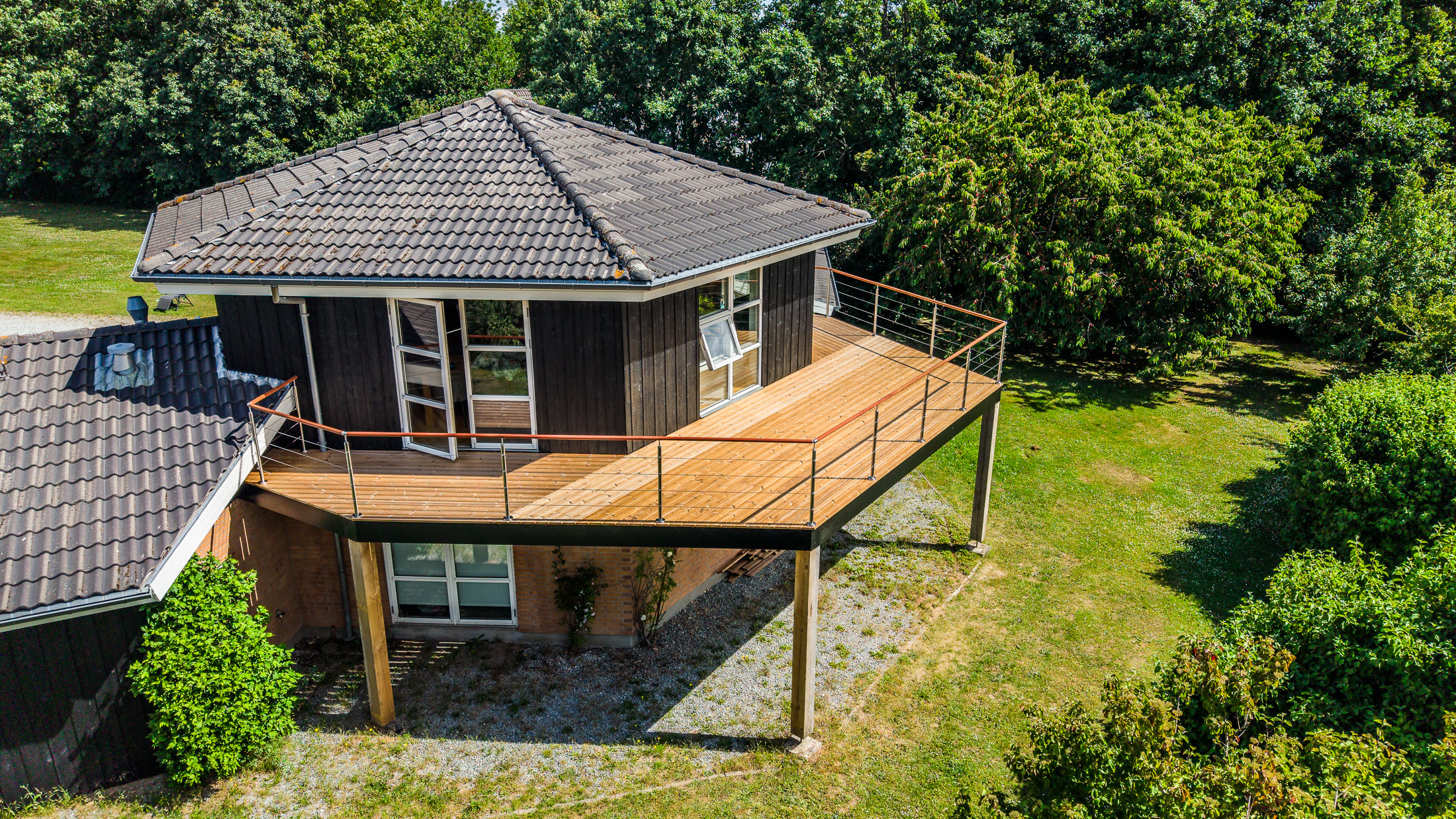
Wire balustrades are particularly well-suited for a raised deck when you want to preserve the view of the garden or the surrounding area. The thin wires take up little visual space and ensure that the balustrade doesn’t block the view as much as denser types of balustrades.
The effect is especially noticeable along longer sections of decking, where the wires follow the shape of the deck without dominating the view. This is particularly useful when the outlook is an important part of the outdoor space.
If the deck has a change in level where there is a risk of falling, the height and design of the balustrade must meet the applicable requirements. Always check the current rules and guidance with your local authority or the relevant body.
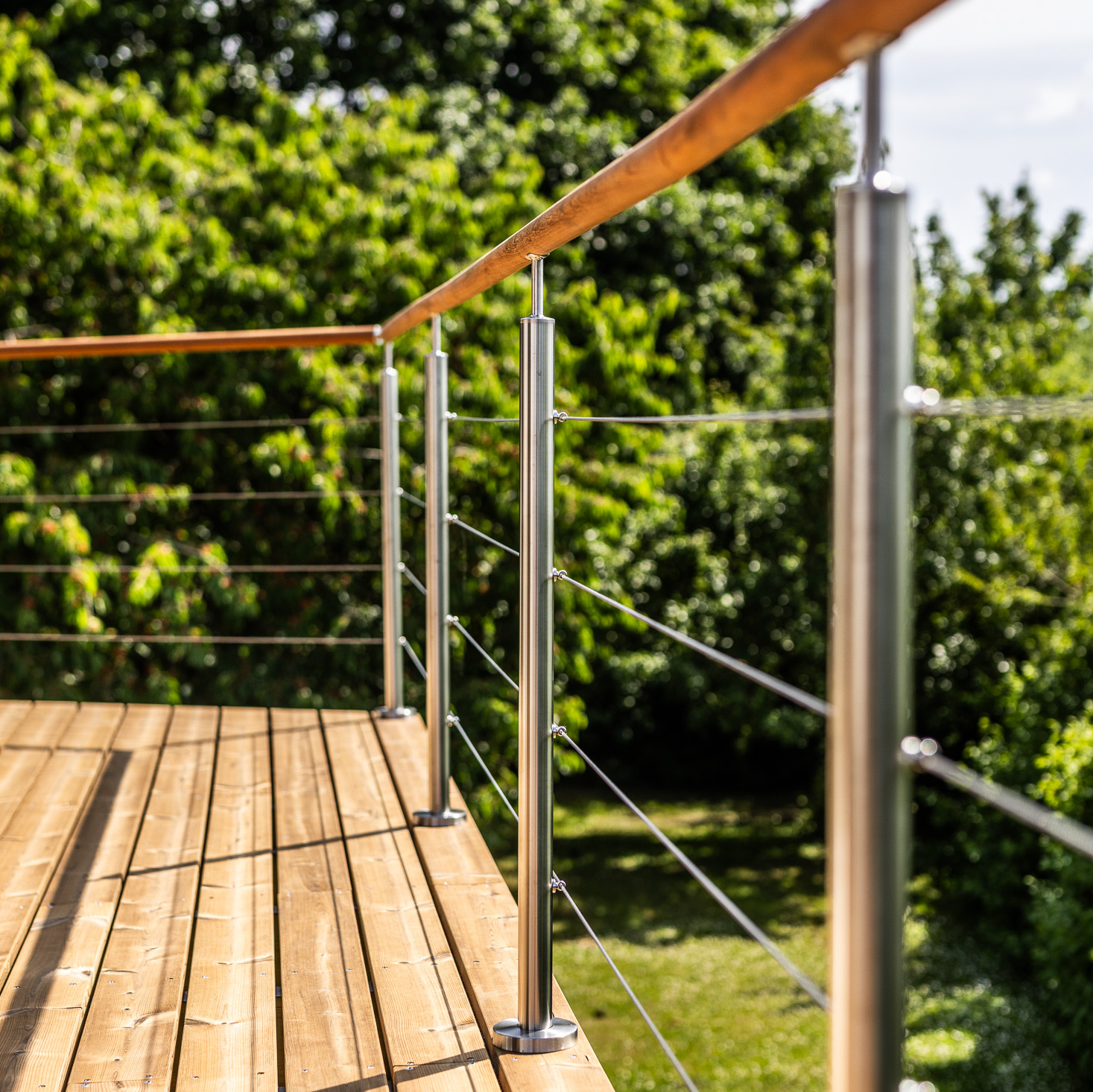
What does a timber top rail do for a wire balustrade?
A timber top rail makes a wire balustrade more comfortable to grip and gives it a warmer appearance. It can also help tie the stainless steel balustrade in with the timber decking.
More comfortable to hold
Your hand touches timber instead of metal. This provides a softer grip in everyday life, especially in places where the balustrade is used frequently or where the metal gets hot in the sun.
Connects the balustrade to the deck
The timber top rail creates a visual connection between the balustrade and the decking. This helps the structure feel more integrated with the surrounding materials.
Softens stainless steel and wire
The warm tone of the timber can balance out the stainless posts and wires. This gives the balustrade more character without compromising the visually light feel or the view.
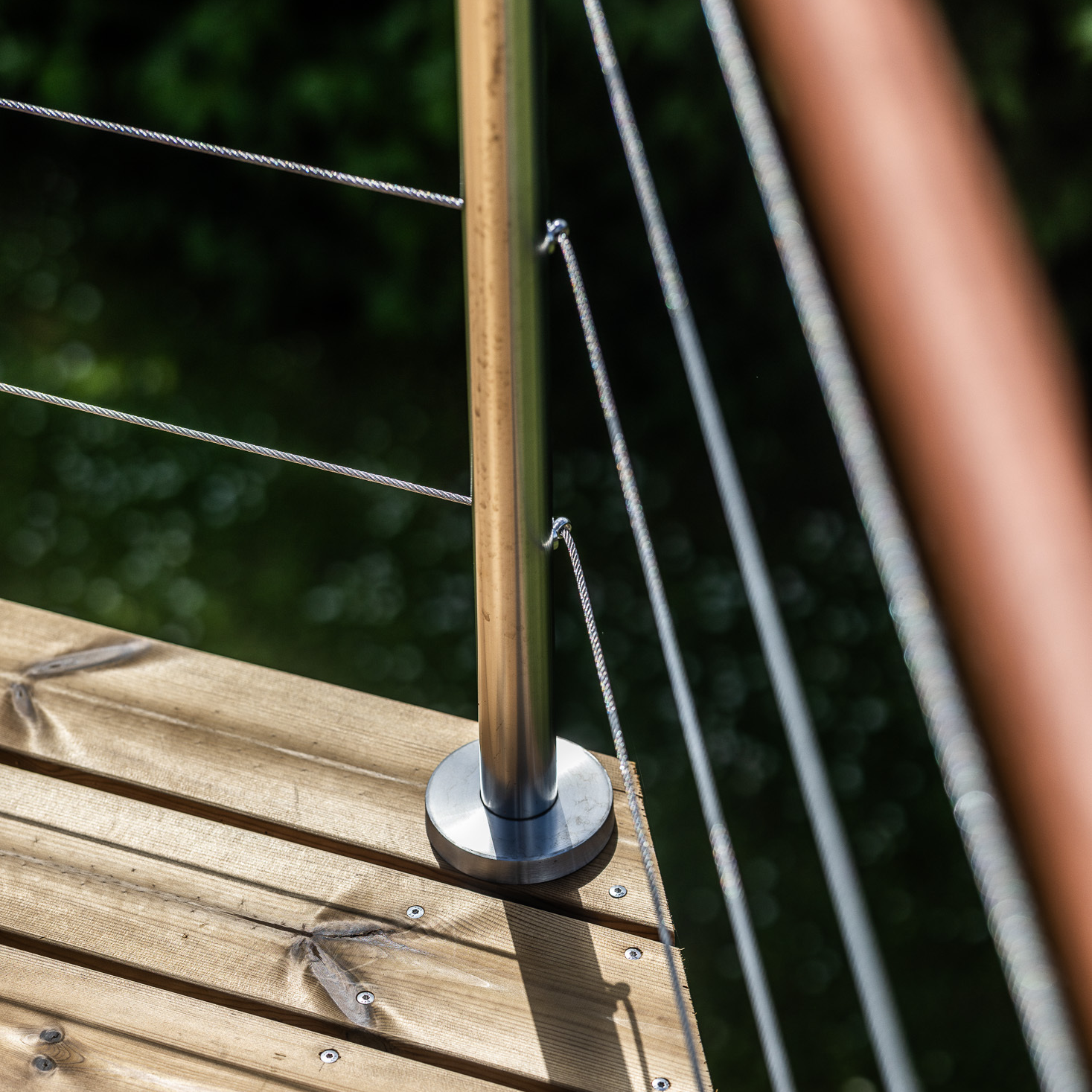
How do you fix a wire balustrade to a timber deck?
On timber decking, the posts are often top-mounted with a base plate anchored in a load-bearing substrate. This gives a clean fixing and lets the posts follow the edge of the deck.
The fixing needs to be planned before ordering the balustrade. That way, the placement of the posts can be adjusted to fit the floor joists and studs instead of being based solely on the position of the decking boards.
Make sure the post is anchored to a load-bearing joist and not just to the deck board. On a narrow deck, a fixing on the outside of the joist can also free up more floor space.
How do you plan a wire balustrade around corners and changes of direction?
Plan the wire balustrade around the whole shape of the deck and divide it into sections between the posts. At each corner, the run of the wire must be broken and terminated in a way that works with the posts and the tensioning.
Corners are therefore not an obstacle to a wire balustrade, but they do affect the division into sections. If the deck has multiple angles, the entire layout should therefore be taken into account when designing the balustrade, not just the longest straight section.
Divide the balustrade into sections
The wires need to be tensioned in a controlled way. The balustrade is therefore divided into sections that follow the shape of the deck and the positions of the posts.
Plan every corner
A corner serves as a natural breakpoint. There, posts must be positioned so that both the tension of the wire and the balustrade's design function as intended.
Start with the entire deck
Include the entire shape of the deck in your planning, especially if it runs around the house or has several corners, angles, and shorter balustrade sections.
Wire or glass balustrade – what is the difference?
Both wire and glass preserve the view and let light through, but they serve different purposes. Wire balustrades take up less visual space and allow the wind to pass through, while a glass balustrade can also provide shelter on a wind-exposed patio or balcony.
| Needs | Wire balustrade | Glass balustrade |
|---|---|---|
| Preserve the view | Very good | Very good |
| Provide shelter from the wind | No, the wires allow wind to pass through | Very good |
| Let in the light | Very good | Very good |
| Cleaning | Does not need to be cleaned in the same way as glass | Rain, pollen, and fingerprints become visible on the glass surface |
| Maintenance | The wire tension may need to be checked and adjusted | Clean as needed |
| Visible from a distance | Very little | The glass surface can reflect light |
On many decks a combination works well: wire where the view matters most and glass on the side facing the wind.
What should you consider before choosing a wire balustrade?
Above all, check the wire tension, the balustrade’s design, the choice of materials, the maintenance of the timber components, and the conditions that apply at the site. This makes it easier to choose a solution that works both practically and visually.
Check these five points
-
Wire tension
Wires must be properly tensioned so that the balustrade has a uniform and polished appearance. The tension may also need to be checked and adjusted over time.
-
Child safety
Horizontal wires differ from vertical slats when it comes to the ability to climb. If small children are near the balustrade, it is therefore especially important to check that the balustrade’s design is suitable for the location and intended use.
-
Materials by location
Environments with high humidity, salt, or exposure to the elements place stricter demands on the choice of materials. Therefore, base your decision on where the balustrade will be installed, not just on the look you want.
-
Care of timber top rail
If you choose a timber top rail, the timber will need to be maintained based on the type of timber, the surface treatment, and how exposed the location is. Consider future maintenance needs right from the start when selecting the material combination.
-
Balcony in a block of flats
On a balcony, there may be factors beyond your control. Therefore, check the rules for the property and whether the balustrade can be modified before you order a new solution.
Start with the needs of the site. Views, wind, safety, fixing and the environment all influence which wire balustrade works best in practice.
Which wire balustrade is the best fit for your deck or balcony?
Start by considering the view, the wind, and the site conditions. Our customer service team will be happy to help you find the right solution.
What do you need to know about wire balustrade for patios and balconies?
Here are brief answers to frequently asked questions about windbreak, child safety, fixing, wire tension, materials, and wire balustrade on balconies.
Is a wire balustrade suitable for a raised deck?
Yes. Wire balustrades are particularly well-suited for a raised deck when you want to preserve the view and have the balustrade take up as little visual space as possible.
Does a wire balustrade provide shelter from the wind?
No. The wires allow wind to pass through. If shelter is important on your deck or balcony, a glass balustrade may be more suitable, or you could combine glass and wire on different sides.
Is a wire balustrade suitable where children are present?
It depends on the design of the balustrade and the conditions at the location. Horizontal wires present different climbing risks from vertical slats, so the design needs to be checked especially carefully in areas where younger children are present.
How do you install a wire balustrade on a timber deck?
Wire balustrade posts can be fixed to a timber deck using base plates anchored to the load-bearing structure. Plan the fixings around the joists and supporting framework, not just the position of the decking boards.
Do the wires in a wire balustrade need re-tensioning?
Yes. Wire tension may need to be checked and adjusted over time. Correct tension keeps the wires evenly aligned and helps the balustrade retain its intended appearance.
What kind of material is suitable for a wire balustrade near the sea?
Near the sea, salt, moisture, and weather place greater demands on the material. For a wire balustrade in such environments, marine-grade stainless steel is a suitable choice.
Can you replace the balustrade on a balcony in a block of flats?
It depends on the property's regulations and who is responsible for the balcony and balustrade. Therefore, check whether the balcony balustrade can be modified and what conditions apply before you order a new wire balustrade.