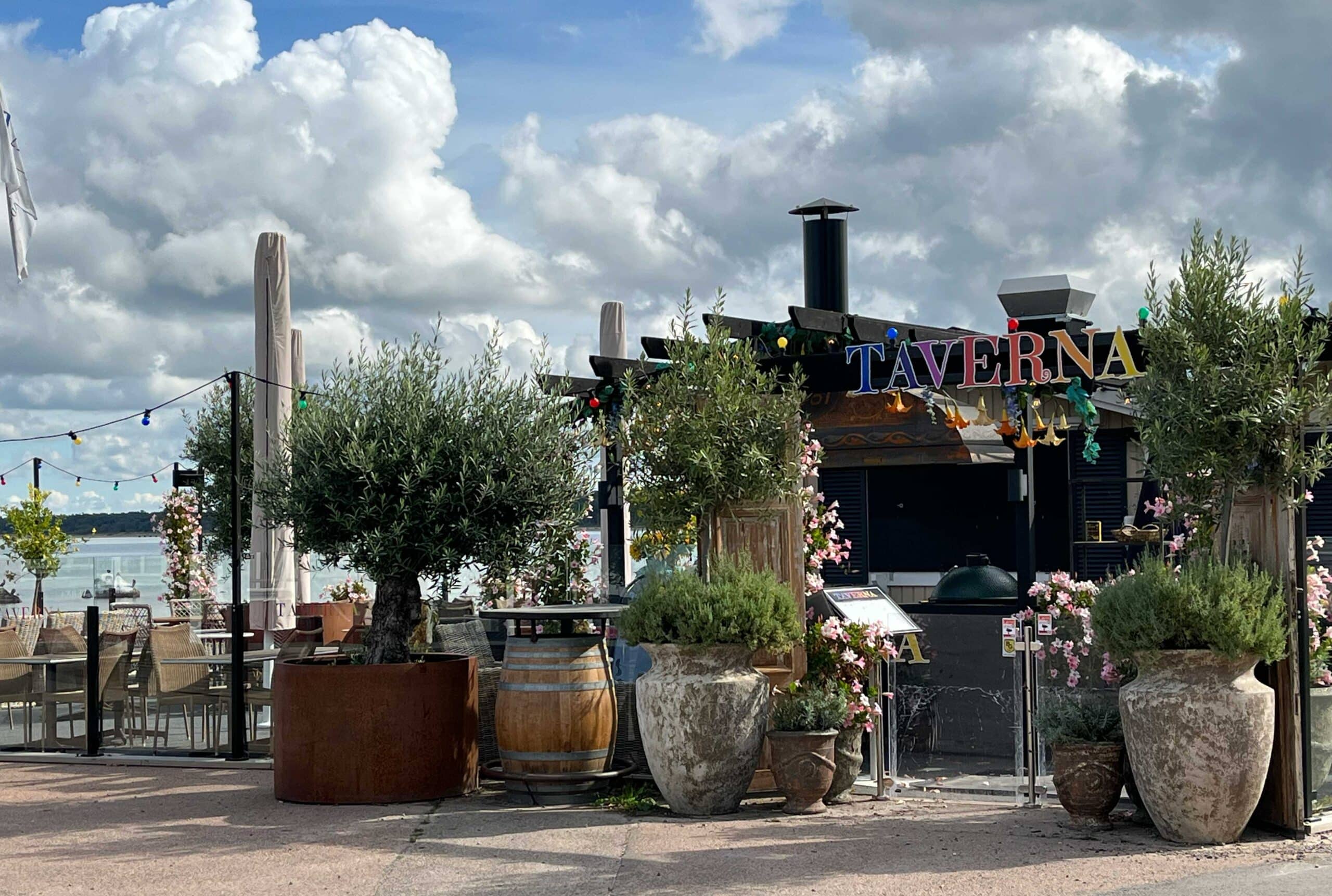
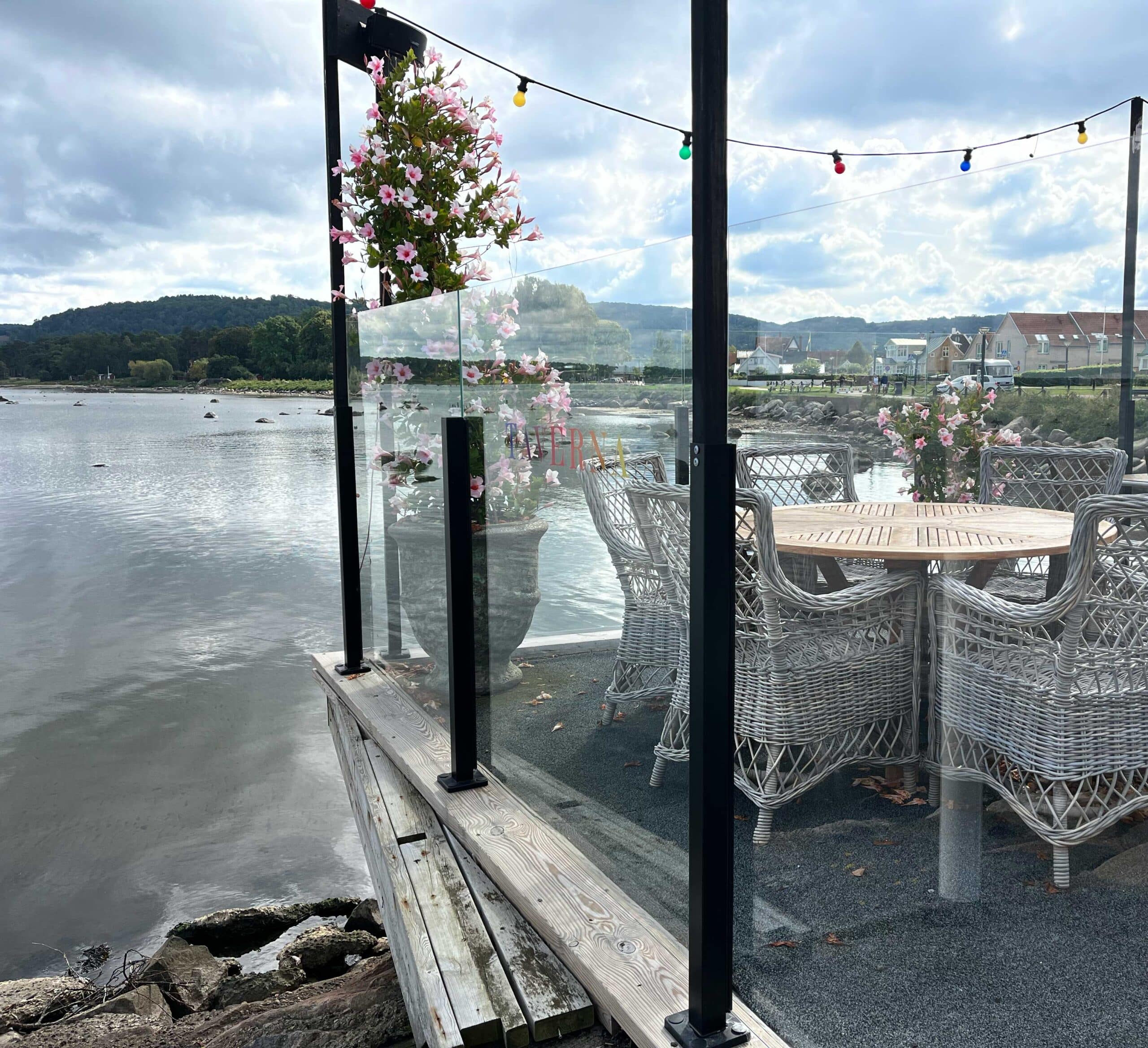
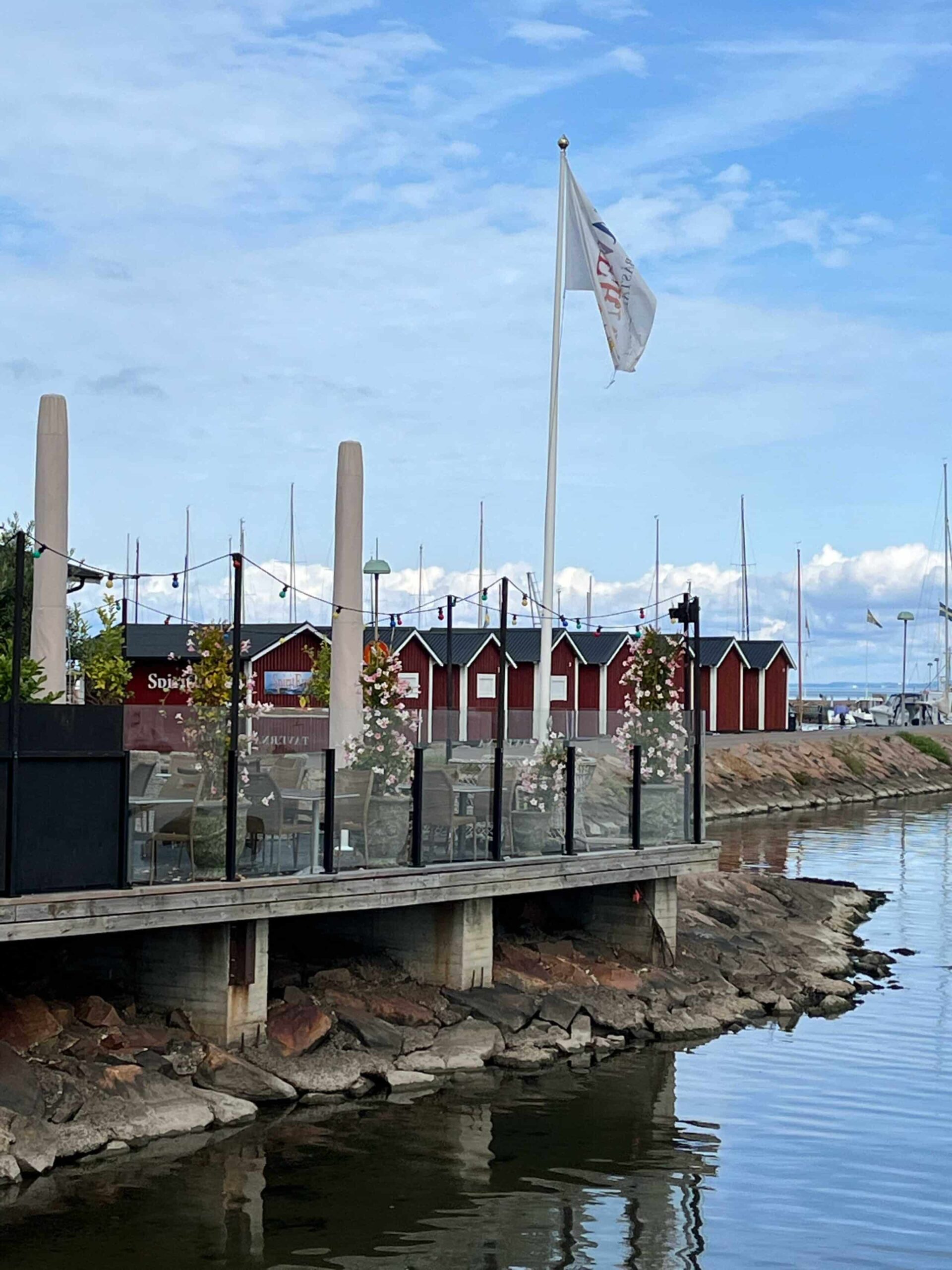
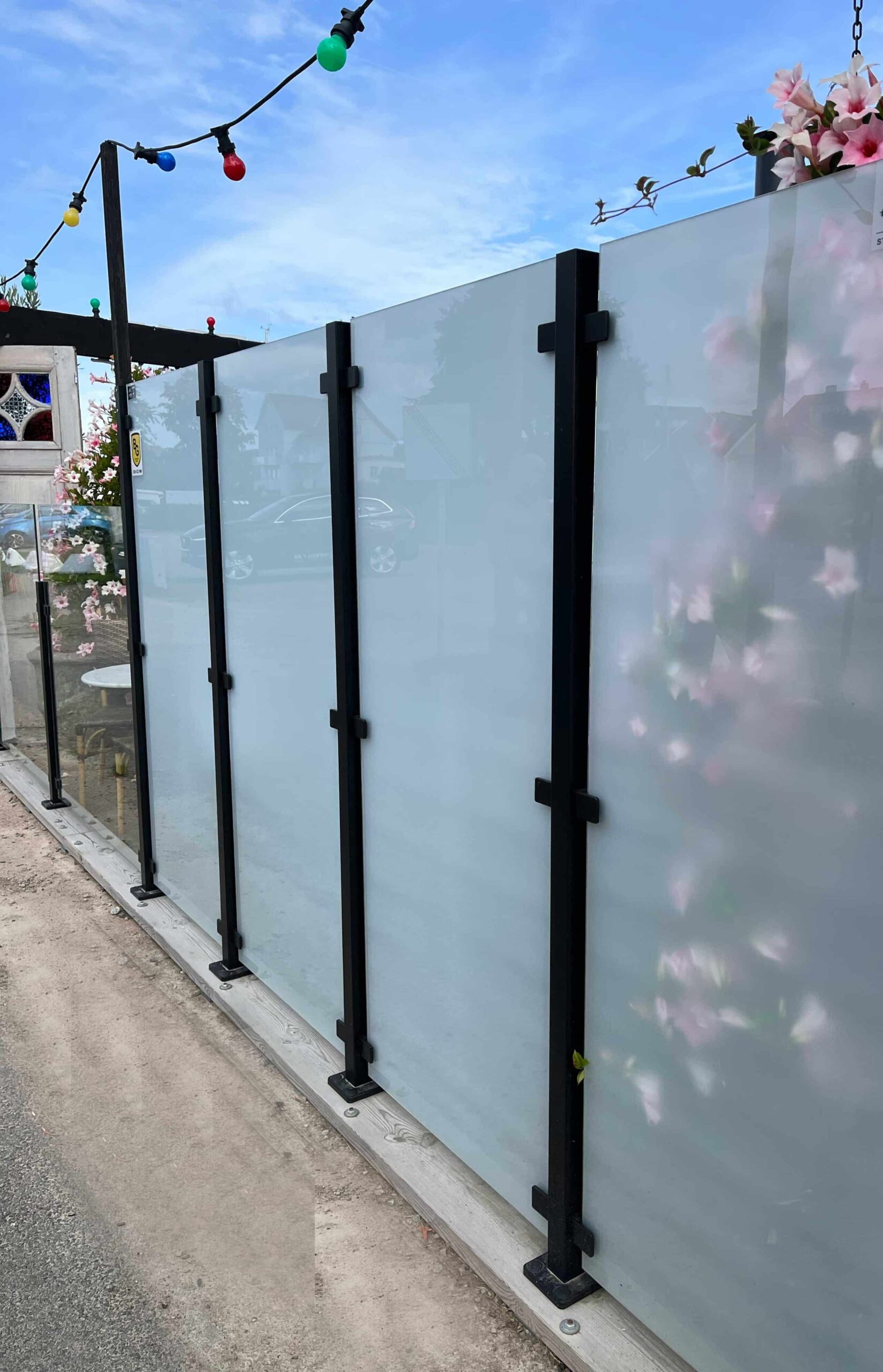
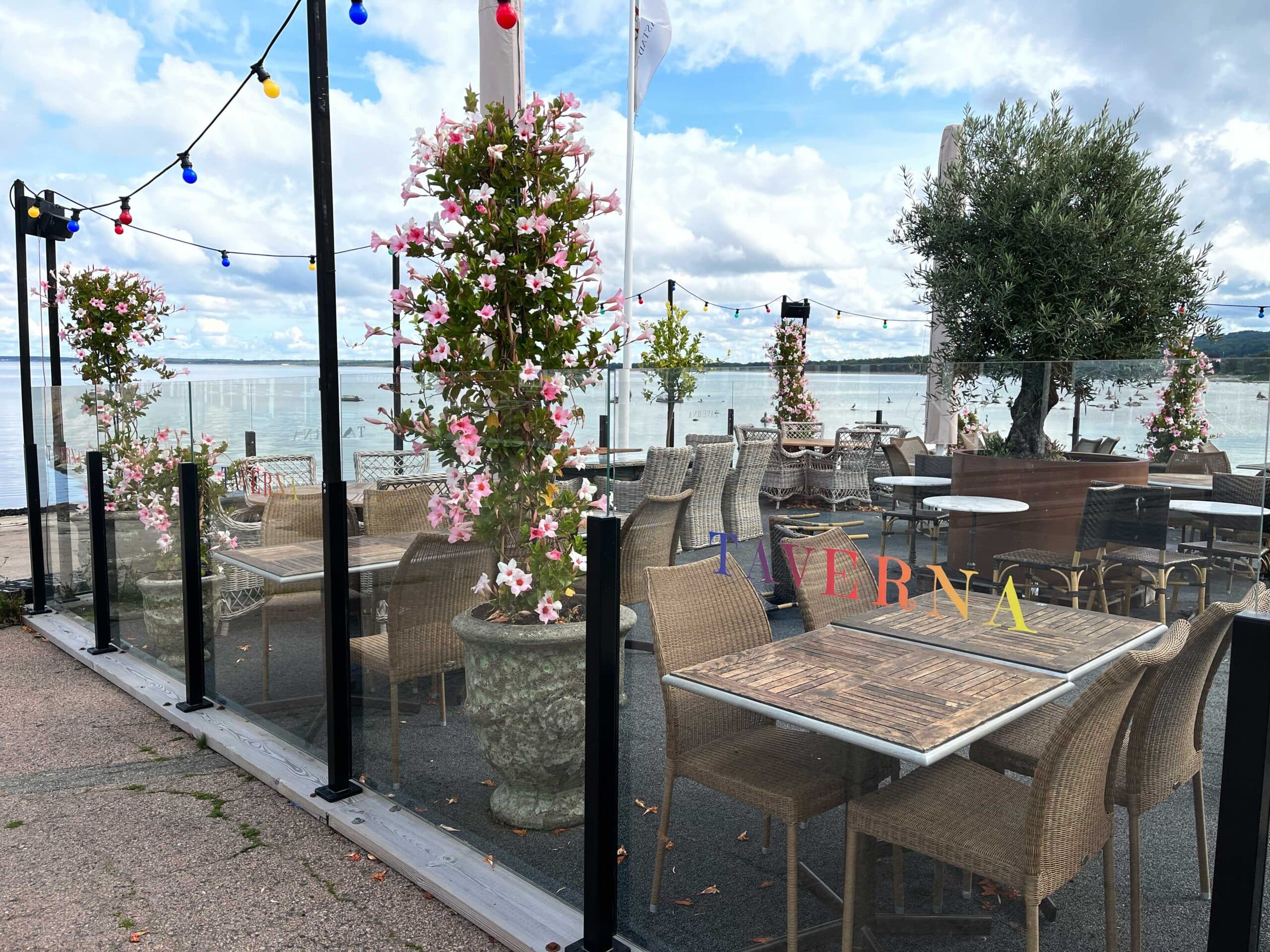
A glass balustrade on an outdoor patio can create windbreak and a clear boundary without obstructing the view. For the outdoor patio at the harbour in Båstad – which was called Taverna Båstad when the project was completed and later became Sannegårdens Kebab & Bar – we supplied Arcus with black-lacquered aluminium posts and custom-made glass panels. The combination of tall, clear glass surfaces and slender posts creates a more wind-protected environment where guests can still enjoy the view of the harbour and the water.
How do you combine windbreak and a view of the sea at an outdoor restaurant?
At an outdoor dining area near the water, the view is often an important part of the guest experience. At the same time, wind and open locations can affect how comfortable it is to sit outdoors. The challenge is to create a sheltered and clearly defined dining area without shutting out the surroundings.
At the harbour in Båstad, a glass balustrade with extra-tall glass panels was chosen to combine windbreak with good transparency. The clear glass lets guests look out over the harbour, while the design of the balustrade helps to reduce the effect of the wind on the seating areas.
The black-painted aluminium posts provide a cohesive frame for the outdoor dining area. Together with the transparency of the glass, they create a modern look that suits the restaurant’s location and allows the view to remain a central part of the experience.
Which glass balustrade was chosen for the outdoor dining area in Båstad?
We chose the Arcus, our glass balustrade with slender aluminium posts and large glass surfaces. The model, formerly known as Alu Modern, features a minimalist design in which posts takes up relatively little visual space.
For this project, black-lacquered posts were combined with custom-made glass panels that provided greater privacy than a lower balustrade design.
- Project and location
- Glass balustrade for an outdoor dining area at the harbour in Båstad. The restaurant was called Taverna Båstad at the time of the project and was later renamed Sannegårdens Kebab & Bar.
- Balustrade model
- Arcus, formerly Alu Modern, with slender aluminium posts and transparent glass surfaces for an open and minimalist look.
- Colour and materials
- Black-painted aluminium posts were chosen to create a distinct frame that complements the design of the outdoor dining area.
- Custom-made glass
- Extra-tall glass panels in clear, toughened, and laminated safety glass were used to combine windbreak with views of the surroundings.
- Installation
- The balustrade was installed on site in Båstad by an outside contractor.
Why is Arcus perfect for an outdoor dining area with a view?
Arcus is a glass balustrade in which the combination of slim posts and large glass surfaces creates a light visual impression. The balustrade can define a patio without adding as many prominent lines as a balustrade with heavier posts or solid infill.
At the outdoor dining area in Båstad, the glass helps maintain a connection to the harbour and the water. Guests can enjoy the surroundings even while seated at their tables, while the balustrade defines the boundaries of the dining area.
The black-painted posts provide a striking contrast to the transparent glass. The colour accentuates the balustrade’s lines and contributes to a cohesive look, without compromising the sense of openness.
For more information about the model's design, available options, and technical specifications, visit the product page for Arcus glass balustrade.
How can taller glass panels improve the windbreak at an outdoor dining area?
Taller glass panels can help create a more wind-protected environment by slowing the airflow along the perimeter of the dining area. This can be particularly valuable in open outdoor spaces where wind would otherwise affect comfort around the tables.
For the project at Båstad harbour, the glass panels were custom-made to give a higher level of screening. Together with the clear glass, this created a solution in which guests could sit with more shelter without the view of the water being shut out.
How much shelter a glass panel gives depends on its position, the wind direction, surrounding buildings and the layout of the outdoor seating. The fixing of the glass must also be adapted to the wind conditions that may occur at the site.
What does a restaurant glass balustrade need to be able to do?
A glass balustrade at an outdoor serving area needs to work both as part of the restaurant’s design and as a practical boundary. It can be used to mark out the serving area, contribute to wind protection and create an open feel for guests.
Restaurant environments also present unique challenges. Guests and staff move close to the balustrade, furniture may be placed right next to the glass, and the structure is exposed to the elements, dirt, and frequent use. Glass, posts, and fixings must therefore be selected with both location and function in mind.
In Båstad, clear safety glass was combined with black-painted aluminium posts. The height of the glass panels was adjusted to give more wind protection, while the transparent design preserved the view and a welcoming feel in the outdoor seating area.
Should you choose clear, frosted, or tinted glass for an outdoor dining area?
Clear glass is often a good choice when the view is an important part of the outdoor dining experience. Frosted glass can provide more privacy, while tinted glass alters both the amount of light that passes through and the visual appearance of the balustrade.
The choice should be based on whether guests should primarily be able to see through the balustrade, whether visibility needs to be limited, or whether the glass should contribute to a specific design. The table shows how the different types of glass can affect the result.
| Type of glass | Visual impression | Suitable for |
|---|---|---|
| Clear glass | Transparent and open, with a clear view of the surroundings. | The view of the water, the landscape, or the urban environment must be preserved. |
| Frosted glass | A more enclosed look with limited transparency. | The goal is to reduce direct visibility from, for example, streets or nearby areas. |
| Tinted glass | A darker or more pronounced glass surface that affects the perception of light and colour. | The glass is intended to contribute to a more distinct architectural expression. |
Clear glass was chosen for the project in Båstad because the view of the harbour was a central part of the outdoor dining area’s character. The glass options available for a specific balustrade model must be checked on the respective product page.
Which safety glass is suitable for an outdoor dining area?
Glass for an outdoor dining area should be selected based on the balustrade’s location, intended use, and the loads to which the structure may be subjected. In restaurants where guests, staff, and furniture are located near the glass sections, it is important that the entire balustrade solution be adapted to the specific environment.
The project in Båstad utilised toughened laminated safety glass. Toughening affects the glass’s strength and fracture behaviour, while lamination involves an interlayer that helps hold the glass pieces together if the glass breaks.
For taller glass sections, wind loads and the design of the fixings must also be taken into account in the assessment. The properties of the glass are only one part of the overall picture. Posts, fixings, and substrates must also be suitable for the intended use.
How do aluminium and glass work in a coastal restaurant setting?
A glass balustrade near the water is often exposed to moisture, wind, salt, and other contaminants. Materials and surface treatments must therefore be selected with consideration for the environment in which the balustrade will be installed.
Aluminium is highly resistant to corrosion and is often used in outdoor balustrades. However, the material is not entirely maintenance-free. In a coastal environment, salt and dirt in particular may need to be removed from posts and other components to preserve the surface’s appearance.
At the outdoor dining area in Båstad, black-painted aluminium posts were combined with clear safety glass. The smooth glass surfaces can be cleaned as needed, while the painted posts require maintenance using methods appropriate for the specific surface treatment.
How often cleaning is needed depends on the location, weather, and usage. Always follow the product’s care instructions, and also inspect the fixings and other structural components according to the installation instructions.
What should restaurant owners consider before choosing glass balustrade?
When a glass balustrade is used at an outdoor dining area, it is important to plan both the guest experience and the practical use of the space. A well-designed balustrade can help define the space, provide wind shelter and create a cohesive design, but the solution needs to suit the setting.
Three questions provide a good starting point when choosing glass, the type of balustrade, and the location.
Three questions to start with
-
What function should the balustrade serve?
Determine whether the main purpose is to define the dining area, create windbreak, or also serve as fall protection. This will affect the requirements that must be met by the entire structure.
-
Which view would you like to preserve?
Consider how glass and posts affect visibility from both standing and seated heights. At an outdoor dining area with a view of the sea, clear glass can be particularly valuable.
-
What conditions is the balustrade exposed to?
Take into account wind, moisture, salt, dirt, and the number of people using the outdoor dining area. Materials, glass, and fixing must be suitable for the site’s conditions.
What does the glass balustrades project reveal about waterfront restaurants?
The project at Båstad harbour shows how a glass balustrade can be used to combine wind protection with an open view. With Arcus, black-painted aluminium posts and custom-made glass panels, the outdoor serving area was given a cohesive frame that works with the character of the place.
By adapting the design of the glass to the wind conditions, the restaurant’s need for privacy could be reconciled with the desire to maintain a connection to the harbour and the water. This is an example of how function, materials, and design can be planned as parts of the same whole.