

Clear glass is best when you want to maintain the view and maximise light, frosted glass when you want to improve privacy, and tinted glass when you want to block strong sunlight and give the balustrade a darker look.
Which glass surface is best depends, therefore, on what the balustrade is intended to do in your specific location. The view, privacy, light, and compass direction all influence the choice, and different sections of the same balustrade may have different requirements.
In this article, we compare clear, frosted, and tinted glass and show when it can be practical to combine multiple glass surfaces. Smoked glass is treated as a darker version of tinted glass, while ultra-clear glass is an option when you want to reduce the natural greenish tint in clear glass.
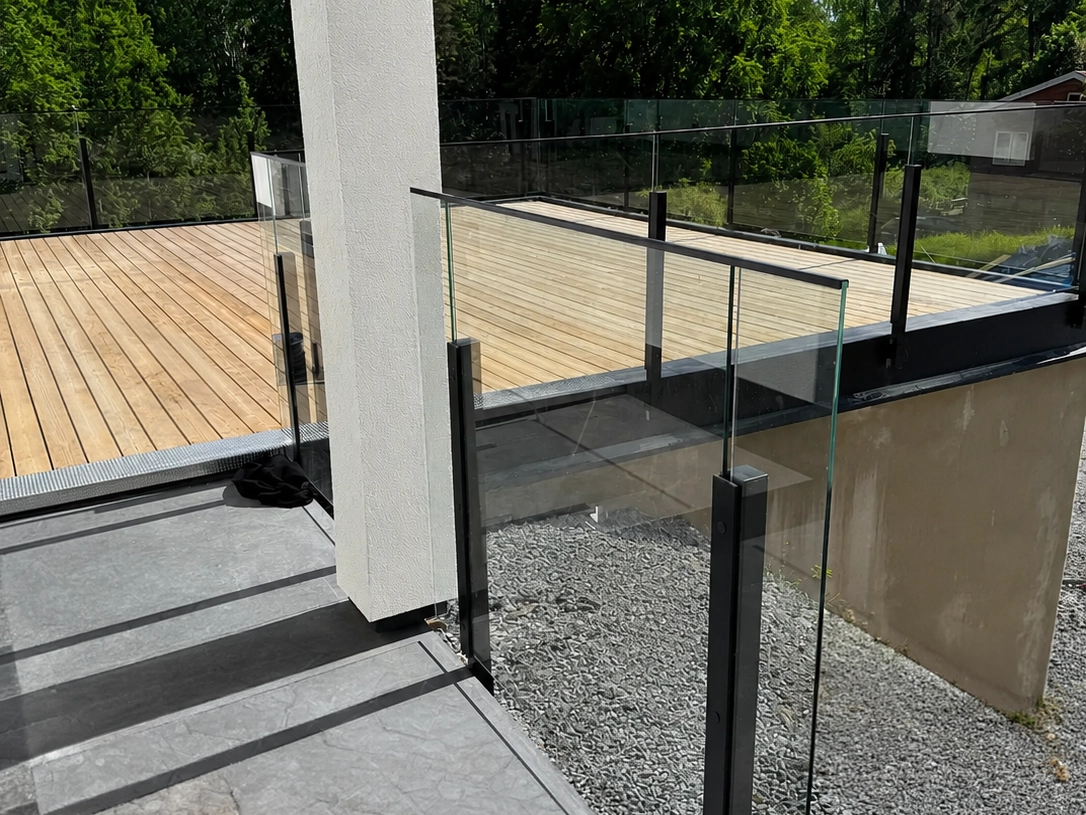
What is the difference between clear, frosted and tinted glass?
Choose clear glass to preserve views, frosted glass when privacy matters most, and tinted glass to soften incoming light and create a darker appearance.
Smoked glass is a darker form of tinted glass. The table compares light transmission, transparency and appearance.
| Glass surface | Light | Overlooking | Appearance | Best for |
|---|---|---|---|---|
| Clear glass | Maximum light intake | Complete transparency | Airy and understated | Views, smaller spaces, and areas where you want to maintain an open feel |
| Frosted / opal | Bright but diffuse | No clear transparency | Mjukt och avskärmat | Balconies, decks, or other areas where privacy needs to be protected |
| Tinted glass | Subdued | Partially transparent | Understated with a stronger tint | Sunny areas and places where you want to reduce light and improve privacy |
| Smoked / dark-tinted | More subdued | Partially transparent | Dark and graphic | Balustrades where the glass plays a more prominent role in the visual design |
Smoked glass is a darker variation of tinted glass, rather than a separate main glass type. The choice depends on how much light, privacy and contrast you want.
What is ultra-clear glass, and when can you tell the difference?
Ultra-clear glass has a lower iron content than standard float glass and therefore significantly less green tint. The difference is most noticeable along the edge of the glass, especially when the glass is thick or the edge is clearly visible.
In a glass balustrade it may therefore be worth comparing standard clear and ultra-clear glass if the balustrade is against a light-coloured façade or if you want the glass to have as neutral an appearance as possible.
A faintly greenish edge
The glass surface appears clear when viewed from the front, but the iron in the raw material gives it a natural green tint that becomes more pronounced along the edge. The thicker the glass, the more pronounced the tint becomes.
More neutral glass edge
The lower iron content reduces the greenish tint and, above all, makes the glass edge more colour-neutral. The difference is most noticeable when the edge is viewed against a light or white background.
Can you combine different types of glass in the same balustrade?
Yes. You do not need the same type of glass along the entire balustrade. You can combine clear, frosted and tinted panels to suit different views, privacy needs and sun exposure.
This can be particularly useful around a deck where the view, visibility from neighbours, and sun exposure often differ on the various sides of the balustrade.
Clear glass where the view matters
Use clear glass where you want to maintain a clear view of, for example, the garden, the landscape, or an open area of the deck.
Frosted glass where you need privacy
If you are overlooked from only one direction, it may be sufficient to use frosted glass in those sections instead of along the entire balustrade.
Tinted glass in sunny positions
Tinted glass can be used on parts that are exposed to strong sunlight and where you also want to give the balustrade a more distinctive look.
Different types of glass on different sides
For example, a balustrade can be clear on the side facing the open view and frosted on the side facing a neighbour or a walkway. This way, each section serves a function that is suited to that particular direction.
To ensure a cohesive overall look, the choice of glass should be planned in conjunction with the balustrade’s posts, profiles, and other details. This way, the glass surfaces can vary without the balustrade appearing to be made up of several separate components.
How do clear, tinted and frosted glass affect light and heat?
Clear glass lets in the most direct light and solar heat, tinted glass reduces both light and heat, and frosted glass diffuses the light so that visibility is reduced without making the space feel dark.
The difference is most noticeable on sunny decks and balconies, where the direction of the sun and how long the balustrade is exposed to direct sunlight affect how the glass surface is perceived.
| Glass surface | Light | Heat | Experience |
|---|---|---|---|
| Clear glass | Lets through the most direct light | Allows solar heat to pass through and can make a sunny spot warmer | Open and bright, especially where the view is important |
| Tinted glass | Reduces the intensity of incoming light | Reduces solar heat gain compared to clear glass | Softer lighting and a more distinctive visual style |
| Frosted glass | Scatters the light instead of allowing a clear view through it | The experience is still influenced by the sun's position and exposure | Ljust men avskärmat, med mindre tydliga siktlinjer |
On a sunny side, tinted glass can be a way to dim the light, while clear glass is a better choice where you want to preserve as much light and view as possible. Frosted glass is primarily a choice when privacy is important.
How do you choose the right glass finish for a balustrade?
Start by considering what actually affects the space: views, visibility, sun exposure, and how prominent you want the glass to be. Then you can choose a glass surface for the entire balustrade or customise different sections to meet different needs.
Review these six points
-
Determine which need is most important
First decide whether you want to preserve the view, increase privacy or reduce glare from strong sunlight. This gives you a starting point for choosing the glass finish.
-
Check where you are overlooked from
Look at the area from the directions where neighbours, passers-by or other people may look in. The level of privacy needed may vary around the balustrade.
-
Assess the cardinal directions and the sun's position
On a sunny side, tinted glass can be an option when you want to dim the light. Where light and the view are more important, clear glass is often a better choice.
-
Consider whether different sections require different types of glass
Clear, frosted, and tinted glass can be combined when needs vary along the balustrade. This means you don't have to let a single issue dictate the entire length.
-
Assess whether ultra-clear glass makes a visual difference
Ultra-clear glass is particularly relevant when the edge of the glass is clearly visible, when the glass is thicker, or when the balustrade is set against a light background where the green tint becomes more noticeable.
-
Keep glass appearance and safety requirements separate
A glass surface primarily describes its appearance and transparency. The required glass structure and fixings must be assessed on a case-by-case basis based on factors such as drop height, load, location, and the balustrade’s design.
Choose clear glass for views, frosted glass for privacy and tinted glass for a darker look or reduced glare. Different finishes can be combined across sections.
Not sure which glass surface is right for you?
Consider the view, privacy, and sun exposure when choosing glass. If you’d like to compare the options further, visit our glass balustrades or contact our customer service team for help with your selection.
What do you need to know about clear, frosted, and tinted glass?
The most common questions concern privacy, light, sun exposure, and how different glass surfaces can be combined. Here are brief answers to some practical questions that may come up when you’re choosing glass for your balustrade.
Which glass provides the most privacy?
Frosted glass offers more privacy by reducing the view through the panel while still letting light pass.
Does frosted glass still let daylight through?
Yes. Frosted glass still allows daylight through, but diffuses it rather than providing a clear view. It need not make an area feel dark.
Does tinted glass reduce visibility?
Yes, tinted glass can increase privacy, but it does not provide the same level of privacy as frosted glass. How clear the view is also depends on the lighting conditions on either side of the glass.
What is the difference between tinted and smoked glass?
Smoked glass is a darker tinted option. Both add colour and reduce transmitted light, but smoked glass has a more pronounced dark appearance.
When is ultra-clear glass worth choosing?
Ultra-clear glass is most useful when you want to reduce the natural greenish tint in regular clear glass. The difference is most noticeable along the edge of the glass, especially against light backgrounds.
Can different sections of the same balustrade have different types of glass?
Yes. For example, you can use clear glass where you want a view and frosted glass where visibility is a concern. This allows the glass surface to be customised to meet the needs of each section of the balustrade.
Does the glass surface affect the type of safety solution the balustrade requires?
The glass finish primarily describes appearance and transparency. The required glass construction and fixings must be assessed separately for the chosen balustrade system.

