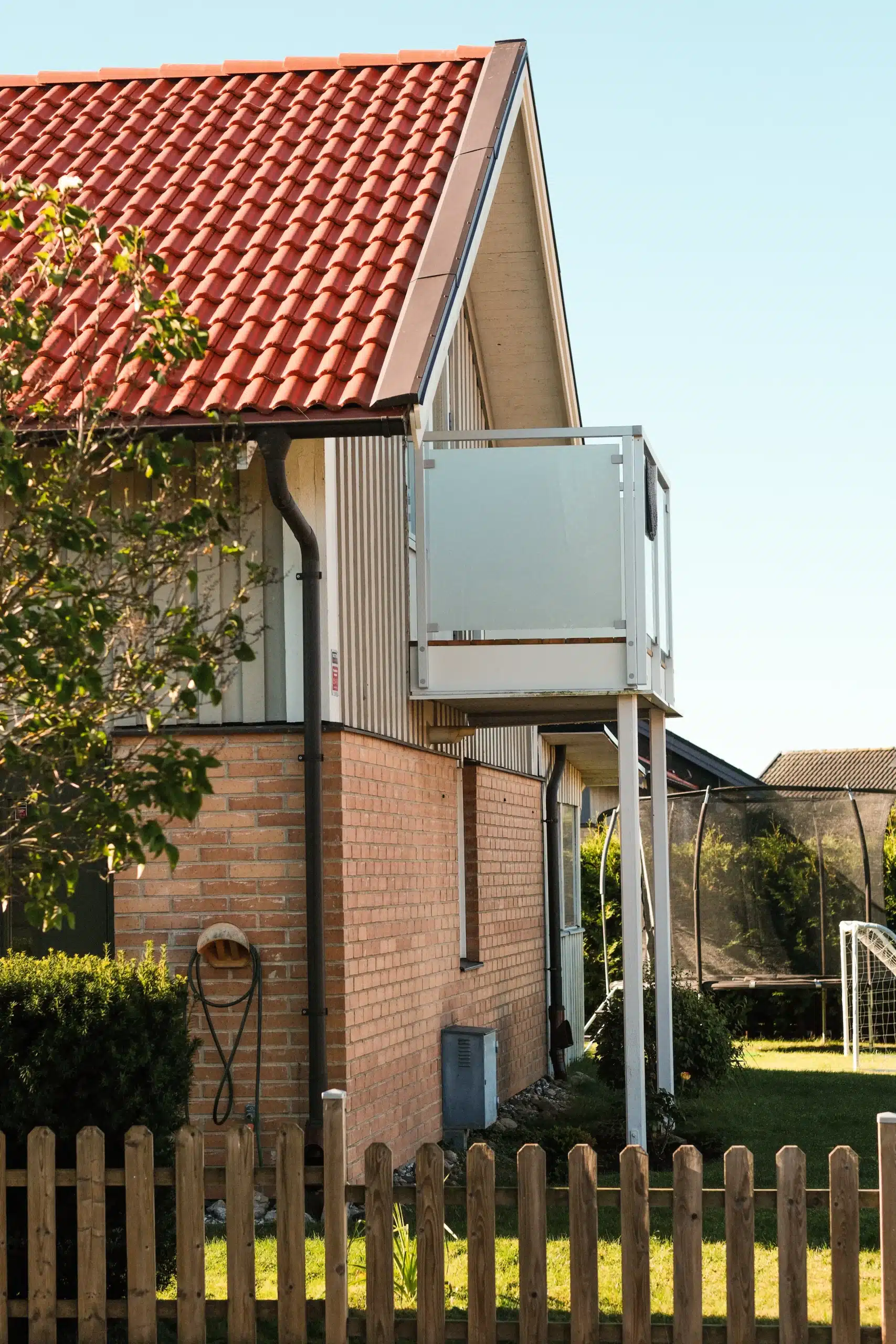
With a coloured glass balustrade, you can choose the colour of the balustrade’s aluminium components and combine them with clear or tinted glass, so that both the posts and the glass complement the house.
Start with colours already used on the façade, windows, conservatory frames or other recurring features. Then decide whether the balustrade should blend in with the building or create a stronger contrast.
With the Color glass balustrade, the posts, top rail and glass clamps can be finished in different colours, while the glass can be tinted. Because the aluminium components and glass tint affect the appearance in different ways, consider both choices together.
Which parts of a glass balustrade can be coloured?
On the Color glass balustrade, the posts, aluminium top rail and coated glass clamps can be finished in selected RAL colours. The glass can also incorporate a tinted interlayer.
You can choose the same colour for all coated components for a coordinated look, or combine different colours. A timber top rail or stainless steel glass clamps also introduce contrasting materials. Consider all the colour and material choices alongside the glass tint and the surrounding building details.
| Part | Design | Colour options |
|---|---|---|
| Posts | Powder-coated aluminium | Choice of RAL colour |
| Top rail | Powder-coated aluminium. Timber is available as an alternative. | Choice of RAL colour for the aluminium version |
| Glass clamps | Painted zinc. A stainless steel version is also available. | Choice of RAL colour for painted fixings |
| Glass | Laminated glass with the option of a tinted interlayer | Clear or tinted glass |
How does tinted glass work in a glass balustrade?
On the Color glass balustrade, the glass tint is created using a coloured interlayer within the laminated glass. The film is not applied to the outer glass surface, and the colour is chosen before the glass is manufactured.
-
Glass construction
The tinted interlayer sits inside the glass
- The tint comes from a film sandwiched between the glass panes in the laminate. The tinted film is therefore part of the glass’s structure rather than a layer attached to the outside.
-
Integrated colour tone
The film is protected between the glass panes
- Because the tinted interlayer sits within the laminated glass, it is not exposed on the outer surface. This is different from coloured film applied to the outside of an existing glass panel.
-
Colour options
The colour shade is selected before production
- Because the interlayer forms part of the laminated glass, its colour must be chosen before manufacture. The glass tint should therefore be planned alongside the colour of the posts and top rail.
-
Laminated glass
The lamination helps hold the glass together
- In laminated glass, the interlayer helps hold the fragments together if the glass breaks. When the glass is used in a balustrade, the complete structure, including the fixings and other components, must also be suitable for the conditions at the installation site.
Should a glass balustrade match the house or create a contrast?
Both approaches can work. If you want the glass balustrade to blend in, choose a colour that already features on the house. A contrasting colour, on the other hand, can make the balustrade a more prominent architectural feature.
Match the house
Look at the colours of existing windows, doors, conservatory frames, metal detailing and other recurring features on the façade. Choosing a similar colour for the balustrade creates a more harmonious overall look.
If you want a close match, compare the exact colour rather than relying on a shade that merely looks similar on screen.
Create a clear contrast
A contrasting colour can make the balustrade stand out more clearly against the house, whether it is installed on a deck, balcony or staircase.
A contrasting colour looks more intentional when it is clearly different from the façade and surrounding details.
Where do coloured glass balustrades work best?
Coloured glass balustrades work particularly well on decks, balconies, staircases and indoors, where they sit alongside other distinctive materials and colours. On a deck, for example, the colour can connect the balustrade visually with the façade, windows or an adjoining conservatory.
-
Outdoors
Balcony
In this setting, the colour of the posts and the tint of the glass can complement the façade, windows or adjoining conservatory, helping the balustrade feel like part of the overall design.
-
Façade
Balcony
On a balcony, the balustrade is seen alongside the façade, windows and other architectural details. Its colour can help it blend in or create a deliberate contrast.
-
Difference in elevation
Stairs
Along a staircase, the balustrade's colour can complement the steps, flooring, walls or other permanent features, making it part of the overall design rather than a separate detail.
-
Interior
Indoors
Indoors, colour choices are particularly noticeable because the balustrade sits alongside walls, floors, skirting boards and other fixed features. Consider the colour of the aluminium components and the tint of the glass in relation to the room as a whole.
How do you clean and maintain a coloured glass balustrade?
Clean a coloured glass balustrade with lukewarm water, a mild detergent and a soft cloth or sponge. Rinse away any residue, and avoid products or tools that could scratch or dull the powder-coated finish.
Three things to keep in mind
-
Wash with a mild detergent
Lukewarm water and a small amount of mild washing-up liquid are usually sufficient to remove pollen, dust and everyday dirt from the balustrade.
-
Use a soft cloth or sponge
Wipe the aluminium components gently with a soft cloth or sponge. Avoid vigorous scrubbing to reduce the risk of marks on the powder-coated finish.
-
Rinse off the cleaning solution
Rinse with clean water to ensure that no cleaning solution residue remains. If necessary, wipe the surface dry to reduce visible water marks.
How do you choose the right colour for a glass balustrade?
Start with the colours already used on the house and decide whether you want the balustrade to blend in or contrast. Compare the chosen RAL colour with a physical sample, and consider the posts, top rail and glass together before making your final decision.
Check these seven points
-
Decide whether the balustrade should match or contrast
First decide how you want the balustrade to fit into the overall design: by picking up colours already used on the house or by introducing a deliberate contrast.
-
Identify the colours that are already on the house
Look at the windows, doors, conservatory frames, metal detailing and other permanent features that will be visible alongside the balustrade.
-
Check to see if the colour has a RAL number
If you want to match an existing feature, its colour may be documented by the window supplier, housebuilder or paint manufacturer.
-
Compare with a physical RAL sample
Do not rely on your screen as a definitive colour reference. A physical sample makes it easier to judge how closely a shade matches the feature you have in mind.
-
Assess the colour outdoors in natural light
Hold the colour sample up against the surface the balustrade will complement and look at it in both sunlight and shade. Lighting conditions affect how the colour appears.
-
Decide whether the glass should be clear or tinted
Consider whether the colour should come mainly from the aluminium components or whether the tint of the glass should also contribute to the overall effect.
-
Consider the posts, top rail and glass together
Finally, decide whether all aluminium components should share the same colour or whether some should contrast, and check how this works with the glass tint.
Decide on the colour of the aluminium components and the effect you want from the glass tint. This will make it easier to assess the balustrade as a complete design rather than selecting each component in isolation.
Want to explore colour options for the Color glass balustrade?
On the Color product page, you can explore different colours and see how the posts, top rail and glass can be combined. If you need advice on colours, dimensions or finishes, our customer service team can help.
Frequently asked questions about coloured glass balustrades
Find concise answers about RAL colours, tinted glass, choosing colour combinations, safety glass and cleaning coloured glass balustrades.
Is it possible to get a glass balustrade in colour?
Yes. With the Color glass balustrade, you can choose RAL colours for the aluminium components and a tint for the glass, helping the balustrade complement your home's exterior or interior colour scheme.
Can you choose the colour of both the posts and the glass?
Yes. The posts, top rail and glass clamps can be finished in a chosen RAL colour, while the glass can incorporate a tinted interlayer. The aluminium colour and glass tint are selected separately.
How does the glass get its colour in a coloured glass balustrade?
The colour comes from a tinted interlayer placed between the glass panes during lamination. It is part of the glass construction, not a film applied afterwards to the surface.
Should a glass balustrade match the colour of the house?
Not necessarily. You can match the balustrade to colours used on windows, doors or other architectural features for a coordinated look, or choose a contrasting colour to make it stand out.
How do you choose the right RAL colour for a glass balustrade?
Start with the colours already on the house, and then compare them to a physical RAL sample in daylight. Colours may appear differently on screens and in print than they do on the finished surface.
Is the tinted glass used in Color laminated?
Yes. Color's tinted glass is laminated, with the tinted interlayer enclosed within the glass. A balustrade's suitability must also be assessed as a complete system, including glass dimensions and fixings.
How do you clean a glass balustrade with powder-coated parts?
Use lukewarm water, mild detergent and a soft cloth or sponge. Rinse afterwards and avoid abrasive cleaners, steel wool or tools that could damage the coated finish.