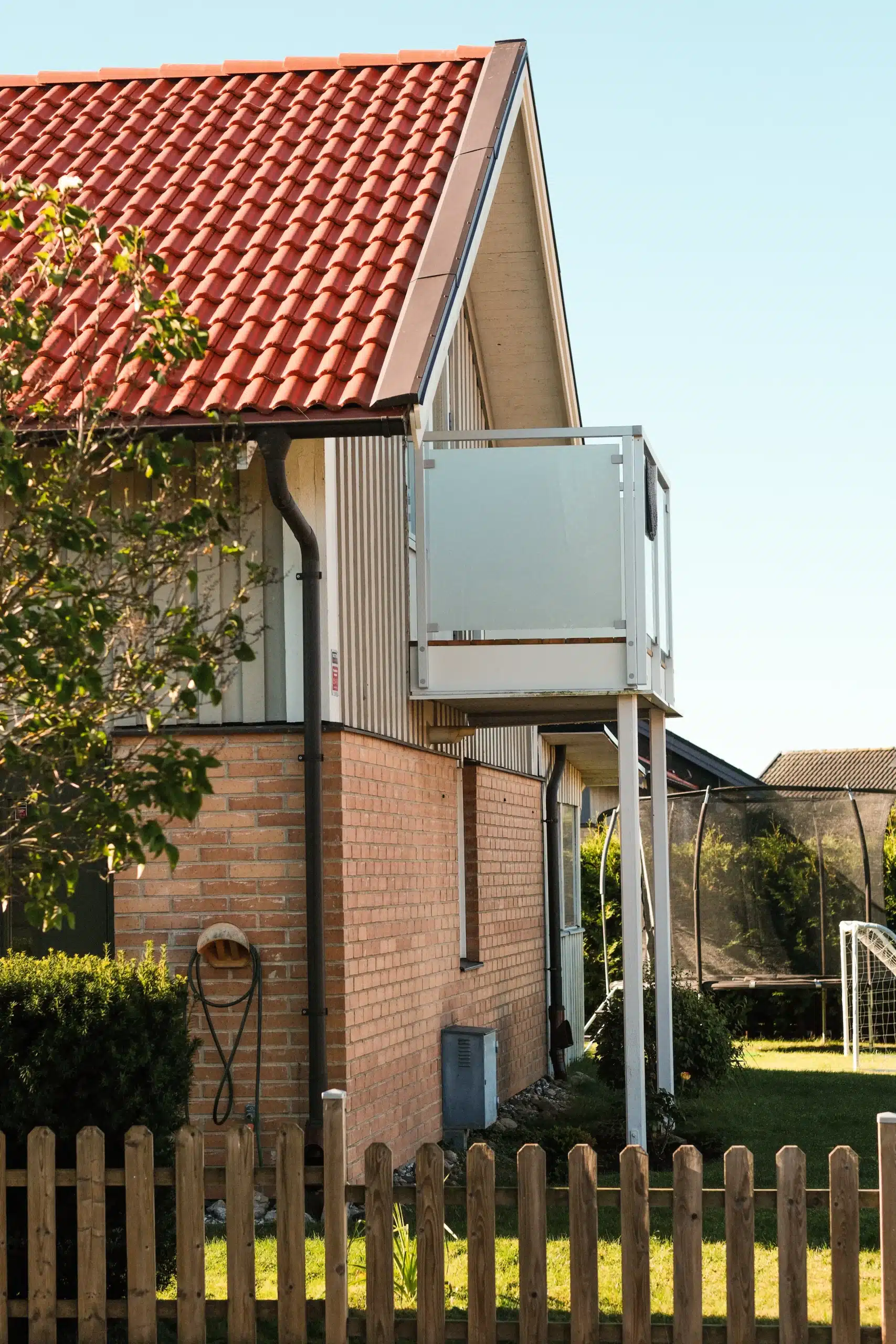
A privacy screen for your patio provides seclusion by interrupting unwanted sightlines without making the patio feel completely enclosed. The right height and materials can shield you from overlooking while still allowing in natural light, fresh air, and that open feeling.
Frosted or tinted glass suits when you want to combine screening with daylight, while slats can give a lighter screen where you still want air and part of the view to come through. Which solution works best depends on where you are overlooked from and how the patio is used.
In this guide, we’ll go over the different types of privacy screens, which height is suitable for different sightlines, materials and maintenance, as well as what you need to consider regarding drop height, planning permission, and property boundary.
Which type of privacy screen do you need?
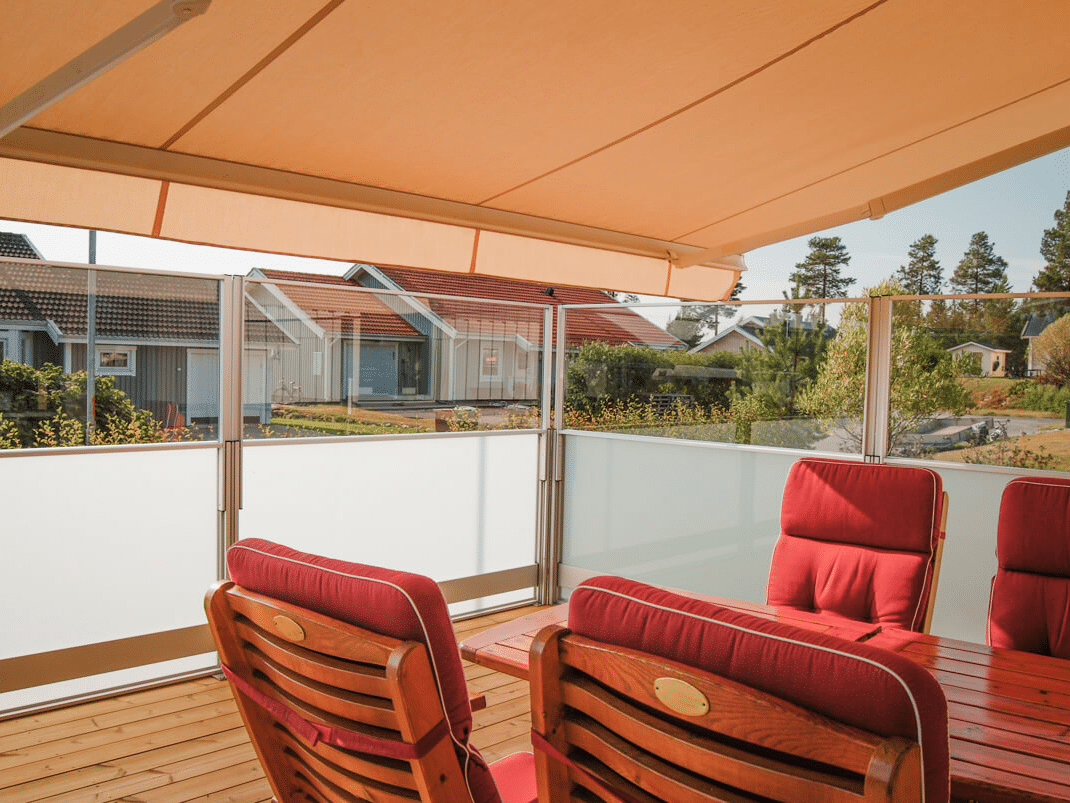
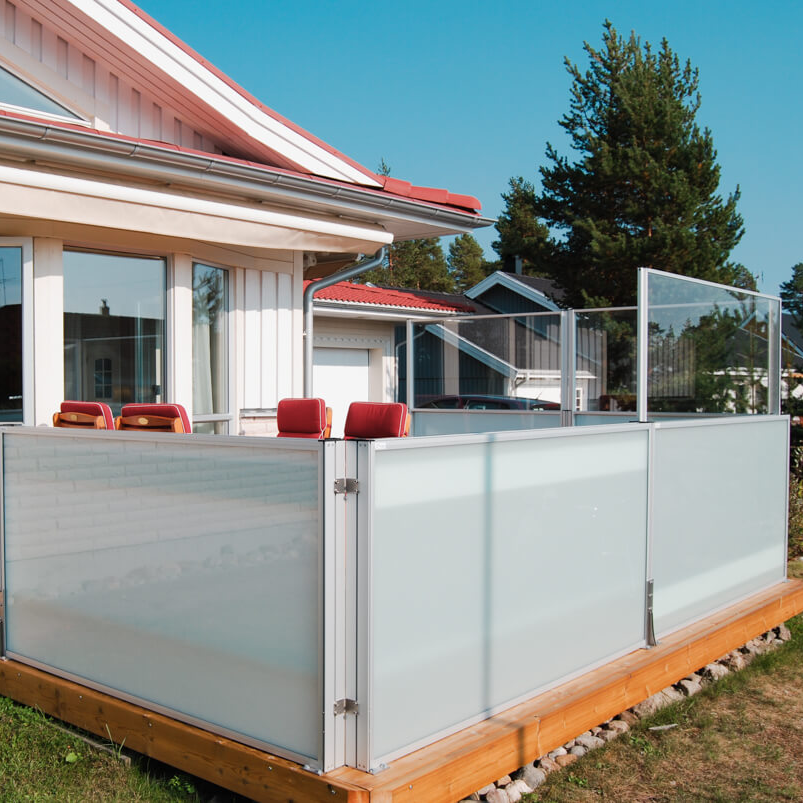
Frosted glass suits when you want a lot of privacy without losing daylight, while slats give a lighter screen and tinted glass mainly reduces both visibility and strong light. Clear glass works as a windbreak but does not actually give privacy.
You will find several such solutions among our privacy screens for decking and patios.
| Solution | Privacy Screens | Light | Windbreaks | Best for |
|---|---|---|---|---|
| Frosted glass | Full | Diffuse light passes through | Yes | Where you want to avoid making the patio darker |
| Tinted glass | Partially | Subdued | Yes | South-facing with plenty of sun |
| Vertical slatted screen | Good | Yes | Partially | Airy look |
| Horizontal slatted screen | Very good | Yes | Partially | Most privacy per metre of height |
| Clear glass | None | Full | Yes | Wind shelter without privacy |
Frosted glass allows natural light through
Of the options in the table, frosted glass is the one that provides complete privacy while allowing daylight to pass through.
The light spreads as a soft, diffuse glow rather than being blocked by a solid surface.
Slats interrupt the line of sight
Vertical slats spaced approximately 30–50 millimetres apart reduce direct visibility but still allow air and some light to pass through.
The smaller the gap, the more screened the patio feels.
What height should a privacy screen be for the patio?
The height should be adjusted according to the actual line of sight. About 120 cm may be sufficient when you mainly want to protect people who are seated, while about 150 cm provides more privacy even for people who are standing, and 180 cm provides a taller, more comprehensive screen. A taller screen is therefore not always better if the overlooking comes only from a lower level.
- About 120 cm Privacy when seated
- Ideal when you mainly want to screen off people sitting at a dining table or lounge furniture, for example. This may be sufficient when people can see in from roughly the same level as the patio.
- Approximately 150 cm Sitting and standing
- Provides more privacy even when you're standing. The height may be suitable when your patio is located near a walkway, street, or other area where passersby are at roughly the same level.
- Approximately 180 cm High privacy screen
- Provides more comprehensive privacy screening. Check which regulations and any permit requirements apply before building a tall or solid screen, as the rules may depend on its height, density and position.
- Combined glass Frosted at the bottom, clear at the top
- Frosted glass in the lower section can provide privacy at seating height, while clear glass above preserves more of the view, natural light, and a more open feeling.
Can a privacy screen also serve as a balustrade?
Yes. If there is a difference in level on the patio, the same structure can provide both privacy and fall protection, but only if it is designed and dimensioned as a balustrade.
Frosted glass can block the direct line of sight while allowing daylight to pass through. If the design is also intended to serve as a fall protection, the glass, posts, fixings, and height must all be adapted to the balustrade’s function. Such a solution can also take up less space than a balustrade with a separate privacy screen.
What rules apply to privacy screens near a property boundary?
Near the property boundary, you mainly need to consider how tall and solid the structure is, where it goes and how it affects its surroundings. Rules and any permit requirements can vary depending on the design and the location of the property.
Also, base your design on the actual line of sight. Often, one or two targeted sections are enough instead of screening the entire patio.

Three factors influence the assessment
How solid the structure is
An open slatted screen affects the space differently than a tall and completely solid structure. Openness, design, function, and impact on the surroundings can therefore influence which requirements apply. An airy slatted screen can also be a good compromise when you want to reduce visibility without creating the same enclosed feeling as with a solid screen.
Height and position
The applicable regulations and any permit requirements may depend on the structure’s height and its location on the property. Therefore, check the current local requirements before building a tall or dense screen.
Distance to the property boundary
Placing a structure near a boundary may be subject to special rules or approval requirements, depending on where the property is located. Therefore, check the applicable regulations before you build. You should also talk to your neighbour about the location and height in advance – an early conversation can reduce the risk of conflicts.
What material is best suited for a privacy screen on the patio?
Glass and aluminium suit exposed patios because the materials need relatively little ongoing care. The glass you choose, however, depends on whether the screen is only for privacy or also needs to act as a balustrade where there is a change in level.
Frame
Powder-coated aluminium
Aluminium is a common choice for posts and profiles. The material does not rust, and its powder-coated surface typically does not require periodic painting or oiling.
Glass
Toughened safety glass
Toughened safety glass is used where the glass needs to withstand the elements, temperature fluctuations, and everyday impacts. If it breaks, it shatters into smaller pieces than regular glass.
If there is a risk of falling
Laminerat säkerhetsglas
Where glass needs to prevent people from falling through, the complete system, including the glazing and fixings, must be designed for that purpose. The interlayer in laminated glass helps hold the glass together if a pane breaks.
Easy maintenance
How do you keep a privacy screen clean?
-
Rinse away loose dirt
Start with water so that sand, pollen, and other particles don't scratch the surface when you clean it.
-
Wash the glass gently
Use lukewarm water, mild dish soap, and a soft cloth or rubber scraper. Avoid abrasive cleaners.
-
Wipe down the aluminium profiles
Clean the aluminium with water and a mild detergent. During pollen season, this may need to be done more often.
How do you choose the right privacy screen for your patio?
Start by identifying where people can see in from and how the patio is used. Then you can assess the height, materials, any risk of falling, the number of sections, and whether the location affects which rules or permit requirements apply.
Check before ordering
Seven things to go over
-
Identify the unwanted line of sight
Sit on the patio and note where the view into your garden is actually coming from. It could be a neighbour's window, a walkway, or the street.
-
Decide when you need privacy
Think about whether being overlooked bothers you most when you're sitting at the dining table, reclining on the lounge furniture, or moving around while standing on the patio. This will help you choose the right height.
-
Check whether there is a risk of falling
If the patio is elevated, you'll need to determine whether the structure should also serve as a balustrade and fall protection.
-
Decide how much light you want to keep
Frosted glass provides a high degree of privacy while maintaining natural light. Slats create a more airy look, while tinted glass can also reduce intense sunlight.
-
Estimate how many sections are needed
Aim the screen at the sightlines that bother you. One or two sections are often enough instead of a screen all the way round the patio.
-
Check the regulations and any permit requirements
These regulations may be affected by factors such as the structure’s height, density, and location. Therefore, check the applicable local requirements before building, especially near a boundary.
-
Talk to your neighbour at the boundary
Show your neighbour the position and height before you build. Talking early can prevent disputes and make it easier to find a solution that works for both properties.
Brief summary
Start by considering the line of sight. Then choose the height and material based on how the patio is used, and check for fall hazards, regulations, any permit requirements, and placement before placing your order.
Which privacy screen is best for your patio?
Once you’ve identified the line of sight and determined the height, material, and location, you can compare different options for your patio. If you need help making your choice, customer service can assist you further.
Frequently Asked Questions
What should you consider when choosing a privacy screen for a patio?
Here are brief answers to frequently asked questions about natural light, height, planning permission, fall protection, materials, and maintenance.
Which privacy screen blocks the least light?
Among solutions that provide complete privacy, frosted glass is often the best choice when you want to let in natural light. The glass scatters the light into a soft, diffused glow rather than blocking it like a solid panel. Clear glass lets in even more light, but does not provide privacy.
How tall should a privacy screen be?
Approximately 120 centimetres typically provides privacy for people sitting at a dining table or in lounge furniture. If visibility is also a concern when you’re standing, about 150 centimetres may be more appropriate. A height of around 180 centimetres provides more comprehensive screening. Always base your decision on the actual line of sight and check which rules or permit requirements apply if the screen is tall or dense.
Do you need planning permission for a privacy screen?
It depends on where the property is located and how the privacy screen is designed and positioned. Height, density, function, and location can affect which regulations or permitting requirements apply. Therefore, check current local requirements before building, especially if the screen is tall, dense, or positioned near a boundary.
Can a privacy screen also serve as a balustrade?
Yes, but only if the entire structure is designed and dimensioned as a balustrade. The glass, posts, fixings, and height must together provide the fall protection required for the location. A frosted glass panel in a balustrade system that is dimensioned for the location’s fall protection can provide both privacy and fall protection. A standard freestanding privacy screen, on the other hand, does not replace a balustrade.
What is the difference between frosted and tinted glass?
Frosted glass breaks the line of sight and provides more effective privacy screening while allowing diffused daylight to pass through. Tinted glass reduces light, glare, and direct visibility, but does not provide the same level of privacy. How much you can see through the glass is also affected by the lighting conditions on each side.
Does a privacy screen need to surround the entire patio?
No. Visibility often comes from a single direction, such as a neighbour’s window, a walkway, or the street. In such cases, one or two strategically placed panels can provide sufficient privacy. By screening only the distracting sightlines, you preserve more light, air, and views while reducing the amount of material used.
How do I maintain a privacy screen?
First, rinse away loose dust, pollen, and sand. Then wash the glass with lukewarm water, mild dish soap, and a soft cloth or rubber squeegee. Wipe down the aluminium profiles with water and a mild cleaning solution. Avoid abrasive cleaners, hard sponges, and other products that could scratch the glass or its surface treatment.