

When comparing sustainable materials for balustrades and fences, you need to consider their lifespan, maintenance requirements, location, and how the material can be disposed of after use – not just appearance and purchase price.
Wood, aluminium, stainless steel, glass, and composite materials have different strengths depending on where the structure will be located and how much maintenance you’re willing to put into it over time. A material that works well in a sheltered location may therefore not be the best choice in a coastal, humid, or hard-to-reach environment.
In this article, we compare common materials used for balustrades and fences based on their properties, maintenance requirements, lifespan, and options for recycling or other material management when the structure is eventually replaced.
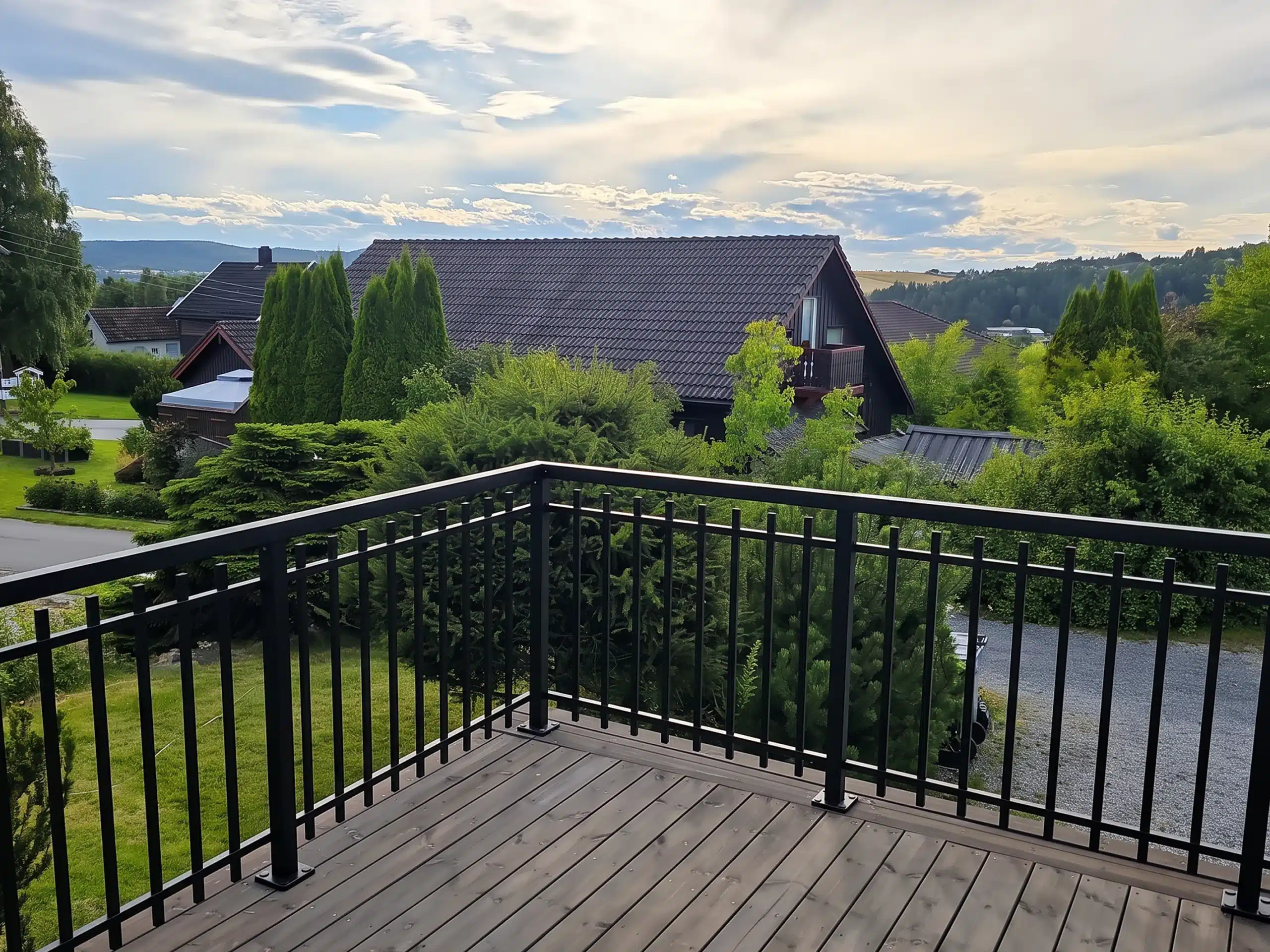
Which materials for balustrades and fences are best suited for different environments?
The choice depends primarily on the environment where the balustrade or fence will be installed. Coastal locations require greater consideration of salt and moisture, while sheltered locations offer more flexibility. In areas where access is difficult, the material’s maintenance requirements become particularly important.
| Location | To take into account | Materials to consider |
|---|---|---|
| Coastal location | Salt and moisture place greater demands on materials, surface treatments, and construction. | Aluminium or marine-grade stainless steel may be alternatives, depending on the design. |
| Fence posts near ground level | Moisture near the ground and the structure's ability to dry out must be taken into account. | Aluminium can be an option when low-maintenance is a priority. |
| Sheltered private garden | A less exposed location offers greater flexibility in terms of materials and maintenance requirements. | Wood, aluminium, or steel may be suitable, depending on the look, finish, and maintenance requirements. |
| Balcony on an upper floor | It is particularly important to plan for access, cleaning, and future maintenance. | Aluminium or glass may be options, depending on the design and the desired look. |
| Scenic location | An unobstructed view and natural light can be more important than a dense or visually heavy design. | Glass or wire may be appropriate when visibility needs to be maintained. |
| Hard-to-reach location | Repeated painting or other maintenance can be difficult to carry out. | Low-maintenance materials should be prioritised based on the site's other conditions. |
The table is a simplified guide. The quality of the material, surface treatment, design, fixing, and local conditions also affect how well the solution performs over time.
How do you compare materials for balustrades and fences over their entire service life?
Don't just compare the purchase price. Also consider installation, ongoing maintenance, how long the structure will last in the given environment, and what a future replacement would entail.
A material that needs to be painted, oiled, or treated at regular intervals involves both labour and material costs over the years. For materials that require less maintenance, that aspect of the comparison looks different.
The length of use also affects the overall picture. If the balustrade or fence needs to be replaced, this involves disassembly, removal, new materials, and reassembly. Therefore, cost, maintenance, location, and service life should be evaluated together.
What are the characteristics of the various materials used for balustrades and fences?
Wood, aluminium, stainless steel, glass, and composite differ primarily in terms of maintenance requirements, durability, and how the material can be handled when the structure is eventually replaced. Therefore, the material’s properties must be evaluated in conjunction with the location where the balustrade or fence will be installed.
- Timber
- Timber is a renewable raw material, but its outdoor lifespan is significantly affected by moisture, ventilation, construction, and maintenance. Painting, oiling, or other treatments may be necessary during its service life. Impregnated timber must be sorted according to local guidelines when it is removed.
- Aluminium
- Aluminium generally requires little ongoing maintenance and does not corrode in the same way as iron and ordinary steel. How a aluminium balustrade performs over time is influenced by material quality, surface treatment, design, and the environment. When the structure is dismantled, aluminium can be sorted as metal for recycling.
- Stainless steel
- Stainless steel combines high material strength with good corrosion resistance. In environments with high levels of salt and moisture, the choice of steel grade becomes particularly important, and marine-grade stainless steel may be relevant in more exposed locations. The material can be sorted as metal when the structure is dismantled.
- Glass
- Glass does not need to be painted or oiled, but it does need to be cleaned to maintain its clarity. In a balustrade, the glass’s structure, edges, and fixings also affect how the structure performs over time. Laminated glass consists of several layers and must be handled according to its structure when being maintained.
- Komposit
- Composite materials come in various formulations, and their properties may therefore vary from one product to another. This material is often chosen when a wood-like appearance is desired, combined with a reduced need for periodic surface treatment. How composite materials should be sorted or recycled depends on the material’s composition and local guidelines.
Is timber a sustainable material for balustrades and fences?
Timber can be a durable material choice when the structure is allowed to dry under the right conditions and when the maintenance the material requires is actually performed. Location, moisture exposure, and surface treatment therefore affect how timber performs over time.
Timber is a renewable raw material
Timber comes from a renewable resource, but the choice of material should not be based solely on that. The properties of the timber, its origin, and the structure’s expected service life must also be taken into account.
Moisture and ventilation affect service life
Timber is more likely to last a long time when the structure can dry out after rain and is not exposed to prolonged contact with moisture. Design and placement are therefore important factors in the choice of materials.
Plan for routine maintenance
Painting, oiling, or other surface treatments may be necessary during the structure’s service life. Timber is therefore best suited when ongoing maintenance is incorporated into the planning from the outset.
Is aluminium a sustainable material for balustrades and fences?
Aluminium can be a good choice when a long service life and low maintenance requirements are key factors in the decision-making process. At the same time, how the material performs over time depends on its quality, surface treatment, design, and the environment where the balustrade or fence will be installed.
Two factors that are particularly important to consider are the ability to reuse the material after it has been used and how much ongoing maintenance the structure requires.
Aluminium can be recycled as a metal
When the structure is eventually taken down, the aluminium can be sorted for recycling. How the parts should be handled depends on the structure’s design and the instructions in effect at the location where the material is dropped off.
Low maintenance requirements when designed properly
Aluminium does not corrode in the same way as iron and ordinary steel and generally does not require the same periodic surface treatment as wood. However, its service life is influenced by factors such as material quality, surface treatment, construction, and the severity of the environment.
How do timber, aluminium, stainless steel, glass, and composite differ?
The differences lie primarily in how the materials are affected by the environment, how much regular maintenance they require, and how they can be handled when the structure is replaced. Therefore, materials should be compared based on the same criteria and not just on purchase price or appearance.
| Materials | What affects service life? | Care | When the material is removed |
|---|---|---|---|
| Timber | Moisture, ventilation, construction, surface treatment, and ongoing maintenance. | May require painting, oiling, or other treatment at regular intervals. | Handling depends, among other things, on how the timber has been treated and which local sorting instructions apply. |
| Aluminium | Material quality, surface treatment, design, and the severity of the environmental conditions. | Typically, this involves primarily cleaning and inspecting the structure's components. | Aluminium can be sorted as metal for recycling when the structure is dismantled. |
| Stainless steel | Steel grade, environment, salt exposure, design, and construction. | Clean and inspect as needed, especially in more exposed environments. | The material can be sorted as metal once the structure is removed. |
| Glass | The structure of the glass, its edges, fixings, and how the structure is subjected to stress and damage. | Above all, cleaning to keep the glass surface free of dirt and deposits. | Handling depends on the type and construction of the glass; for example, whether the glass is laminated. |
| Composite | The composition of the material, the quality of the product, its design, and the environment in which it is used. | It often requires less frequent surface treatment than timber, but maintenance needs vary by product. | Sorting and recycling depend on the material's composition and local guidelines. |
The table shows general differences between material groups. The actual service life and maintenance requirements are always influenced by the product’s quality, design, installation, and the environment in which the balustrade or fence is used.
What determines how long a balustrade or fence will last?
The lifespan of a balustrade or fence depends primarily on whether the material is suitable for the environment, whether the structure is installed correctly, and whether maintenance is tailored to the material's needs.
Choose materials based on the environment
Coastal locations, structures close to the ground, and more exposed sites present different conditions. When materials and construction methods are adapted to the site, the structure is better equipped to function over time.
Adjust the fixing to the substrate
The substrate, fixing, and installation all affect the entire structure. A material with good properties must therefore be combined with a fixing that is suitable for the location and the substrate.
Choose a level of care that works in practice
Materials that require periodic treatment must actually be maintained. In areas where access is difficult, a lower maintenance requirement can therefore be an important factor in the choice of materials.
What should you consider before choosing a material for a balustrade or fence?
Start by considering the site conditions and how much maintenance you’re willing to put in over time. Then make sure that the materials, fixing, and product information are suitable for the design you’re planning.
Check these four points
-
Start with the location
Coastal locations, ground-level structures, high balconies, and more sheltered environments present different conditions. Therefore, start by considering the environment where the balustrade or fence will be installed.
-
Estimate how much maintenance is realistic
Materials that require periodic painting, oiling, or other treatment are best suited when that maintenance can actually be performed. Where access is difficult, a lower maintenance requirement may be a more important factor.
-
Check the fixing method against the substrate
The choice of material must be compatible with the substrate, fixing, and the structure. Therefore, check how the balustrade or fence is to be installed before deciding on the design.
-
Read the product information before making your choice
Compare relevant dimensions, material properties, assembly instructions, and other technical information for the solution you are considering. This makes it easier to assess whether the product is suitable for the location and the structure.
The best choice of materials is one that works with the site's environment, the planned fixing, and the amount of maintenance you're actually willing to put in over time.
Which balustrade is right for your space?
Once you've compared materials, maintenance requirements, and site conditions, you can move on to choosing the balustrade type that's best for you. If you're unsure about materials or design, customer service can help you further.
What should you know about materials for balustrades and fences?
Here are brief answers to common questions about material selection, maintenance, lifespan, and recycling for outdoor balustrades and fences.
Which material is most durable for outdoor balustrades and fences?
No single material is best for all environments. Compare the location, maintenance requirements, expected lifespan, and how the material can be handled when the structure is replaced.
Is aluminium a good choice from a sustainability perspective?
Yes, aluminium can be a good choice when low-maintenance and a long service life are important. At the same time, how the material performs over time depends on its quality, surface treatment, design, and environment, and aluminium can be sorted as a metal for recycling.
How does maintenance affect your choice of balustrade or fencing material?
Maintenance affects labour, costs, and material consumption over time. In areas that are difficult to access, a material that requires less maintenance may therefore be more practical than one that needs periodic surface treatment.
Can glass balustrades be recycled?
Glass can be recycled, but the process depends on the type and composition of the glass. Laminated glass consists of several layers and must therefore be sorted and disposed of according to the instructions provided at the drop-off location.
What makes the biggest difference when building a long-lasting balustrade or fence?
The most important thing is that the materials, design, and fixings are suited to the site’s conditions and that maintenance is practical. This reduces the risk that the balustrade or fence will need to be replaced or redone prematurely.
What factors affect the lifespan of timber outdoors?
The lifespan of timber is primarily affected by its location, ventilation, moisture, construction, and maintenance. Timber is better able to last a long time when it can dry out and when it is painted, oiled, or otherwise treated as needed.

